Every business owner investing in digital marketing eventually asks the same pressing question. You hire an expert, approve a strategy, and eagerly wait for the phone to ring. Days turn into weeks, and you start wondering if your search engine optimization efforts are actually working.
The truth is that search engines prioritize trust. Building that trust requires consistent effort over an extended period. Unlike paid advertising where you can essentially buy your way to the top of page one instantly, organic search requires a more methodical approach. Google needs to understand your website, evaluate your content, and see how users interact with your pages before rewarding you with high rankings.
By the end of this guide, you will understand exactly why the process requires patience. You will also learn the specific variables that dictate your timeline, and discover what a realistic month-by-month growth trajectory looks like for a typical business.
The Short Answer: When Will You See Growth?
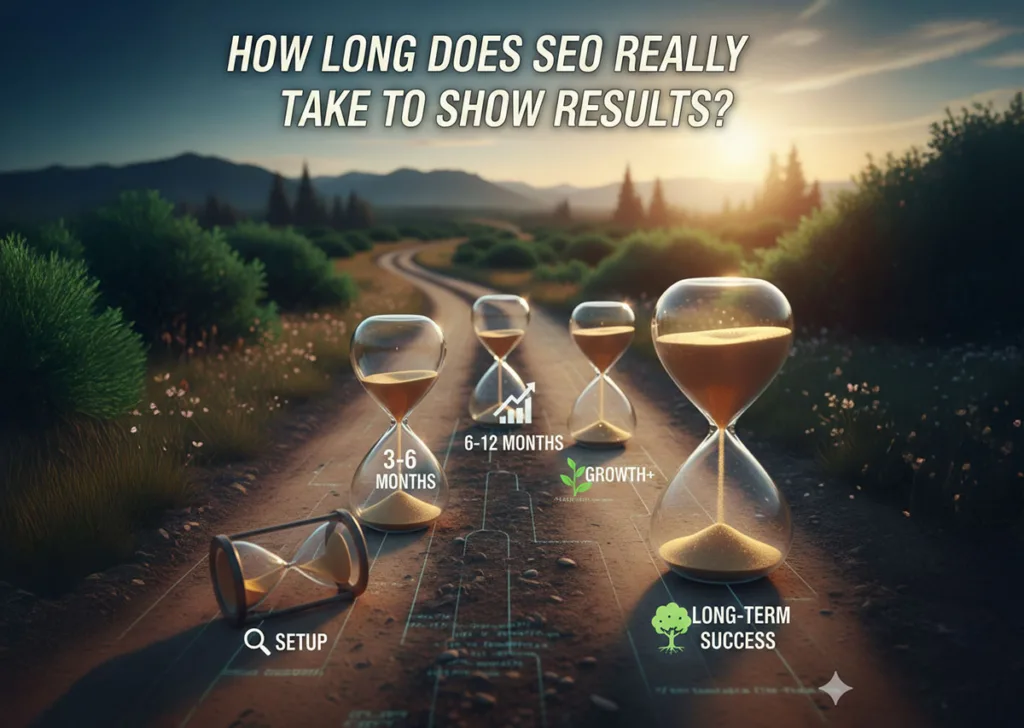
Most reputable experts agree that it takes anywhere from three to six months to start seeing noticeable SEO results. However, “results” can mean different things depending on your specific goals.
In the first few months, results might look like an increase in crawled pages, better keyword indexing, or moving from page five to page two for a target search term. By months four through six, you should start seeing a measurable increase in organic traffic. Significant revenue-generating results, such as a steady stream of qualified leads and sales, often compound after six to twelve months of consistent work.
Factors That Impact Your SEO Timeline
No two websites are exactly alike. The time it takes for your specific domain to rank depends on a variety of unique variables.
Website Age and Authority
Search engines want to serve the best possible answer to a user’s query. If your website is brand new, you have not yet proven your reliability. Established domains with a long history of publishing quality content naturally hold more authority. A ten-year-old site might publish a new blog post and see it rank within a week. A brand-new site might publish the exact same post and wait months for it to reach the first page.
Competition and Industry
Your timeline heavily depends on who you are up against. If you run a highly specialized manufacturing company targeting a narrow niche, you might see rapid movement. You are competing against a small pool of similar businesses. On the other hand, a personal injury law firm or an accounting firm in a major metropolitan area faces fierce competition. Outranking established competitors who have invested heavily in digital marketing for years will demand a longer, more aggressive campaign.
Quality of Content and Strategy
Publishing thin, unhelpful articles will not move the needle, no matter how long you wait. Search engines reward comprehensive, well-researched content that genuinely helps the reader. A customized strategy that targets the right keywords and aligns with your audience’s search intent will accelerate your timeline. Data-backed solutions crafted by seasoned professionals always outperform generic, one-size-fits-all approaches.
Technical Website Health
A beautiful website is useless if search engines cannot read it. Slow loading speeds, broken links, poor mobile optimization, and confusing navigation act as roadblocks. Fixing these technical issues is often the first step in any successful campaign. Once search engine bots can easily crawl and index your pages, your overall performance will improve significantly.
A Realistic Timeline for SEO Success
Understanding the typical phases of a digital marketing campaign helps set proper expectations. Here is a general breakdown of what happens during the first six months of an active strategy.
Month 1: Research and Technical Fixes
The first thirty days are rarely about creating new content. This phase focuses on discovery. A professional team will conduct comprehensive website audits, analyze your competitors, and identify high-value keywords. Developers will work behind the scenes to fix critical technical errors, improve site speed, and ensure your foundation is solid. You probably will not see an influx of new traffic during this phase.
Month 2: Content Creation and On-Page Tweaks
With a solid technical foundation in place, the focus shifts to optimization. This involves rewriting existing pages, improving meta tags, and launching new, targeted content. You might begin to see search engines indexing your new pages. Your site could start appearing in search results for less competitive, long-tail keywords.
Month 3: Building Authority and Initial Movements
By the third month, content creation is usually in full swing. The strategy will expand to include link-building efforts and digital PR to boost your site’s authority. At this point, you should see your rankings slowly climbing. You might jump from page four to page two for specific terms. Traffic will begin to trickle in, though it may not yet translate into a massive spike in sales.
Months 4 to 6: Traffic Growth and Lead Generation
This is the turning point for most businesses. The technical fixes, content upgrades, and authority-building efforts start working together. You will likely see a distinct increase in organic traffic. More importantly, because your strategy targets the right audience, this traffic will be highly qualified. You should notice an uptick in phone calls, form submissions, and direct sales.
Why You Should Ignore "Overnight" Guarantees
You will inevitably encounter agencies promising page-one rankings in less than thirty days. These claims are almost always too good to be true. Achieving rapid results usually involves outdated, manipulative tactics that violate search engine guidelines. While these “black hat” techniques might offer a temporary spike, they almost always result in severe penalties. Your site could be completely removed from search results, destroying your digital presence.
Sustainable growth requires a trusted partner with proven expertise. Agencies with over a decade of experience understand how to navigate the evolving digital landscape safely. They focus on transparency, long-term success, and strategies that actually impact your bottom line.
Frequently Asked Questions
Can I speed up the SEO process?
You cannot force search engines to rank your site faster, but you can work more efficiently. Publishing high-quality content more frequently and resolving technical issues immediately will ensure you do not experience unnecessary delays. However, building genuine domain authority still requires time.
Is SEO better than Google Ads for quick results?
Google Ads will generate traffic the moment your campaign goes live. It is highly effective for immediate visibility. However, the moment you stop paying for ads, your traffic drops to zero. Organic search takes longer to build but offers an incredible return on investment over time. Many successful businesses use a hybrid approach, relying on paid ads for immediate leads while their organic presence steadily grows.
Do I need an agency, or can I do SEO myself?
Business owners can certainly learn the basics of digital marketing. Writing helpful content and ensuring your website is user-friendly are great starting points. However, achieving significant, revenue-driving results requires specialized knowledge. Technical optimization, advanced data analysis, and authoritative link building are complex tasks. Partnering with a dedicated team of experts allows you to focus on running your business while professionals handle your digital growth.
Ready to Start Your Growth Journey?
Search engine optimization is an investment in the future of your business. While it requires patience in the beginning, the compounding rewards of a well-executed strategy are unmatched. By understanding the timeline and committing to a data-driven approach, you set your brand up for enduring success online. If you are tired of being outranked by competitors and want to build a digital presence that consistently drives revenue, it is time to take the next step.