- Real Growth. Proven SEO. Trusted Results.

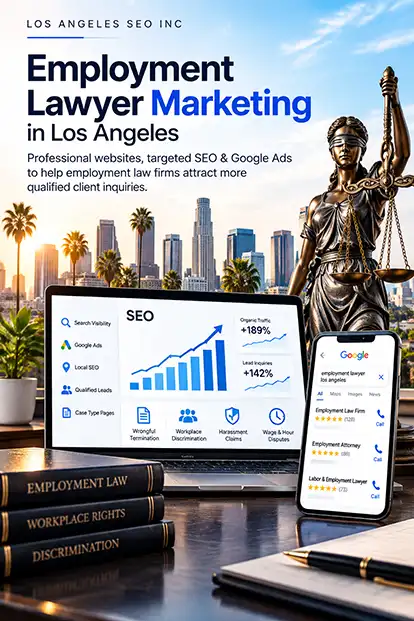
Build visibility around the employment-law matters and markets your firm serves with a connected strategy for search, paid advertising, content, website experience and qualified client inquiries.
Specialty-focused strategy
Case-type search visibility
High-intent paid search
Clear consultation pathways
People often begin with a workplace problem, not a marketing keyword. Your strategy should connect those concerns with the right legal service, location, information and next step.
Employment law marketing requires a focused approach that connects complex client needs, specific case types, local search behavior and trust with the right digital strategy.
Prospective clients may search around a workplace problem before knowing which legal service they need.
Geographic relevance can influence how employment-law services are discovered and evaluated.
Different employment matters need distinct pages, content and search targeting.
Clear attorney, firm and service information helps prospective clients evaluate their options.
Valuable employment-law searches can require coordinated organic and paid strategies.
People facing workplace disputes may research extensively before contacting a law firm.
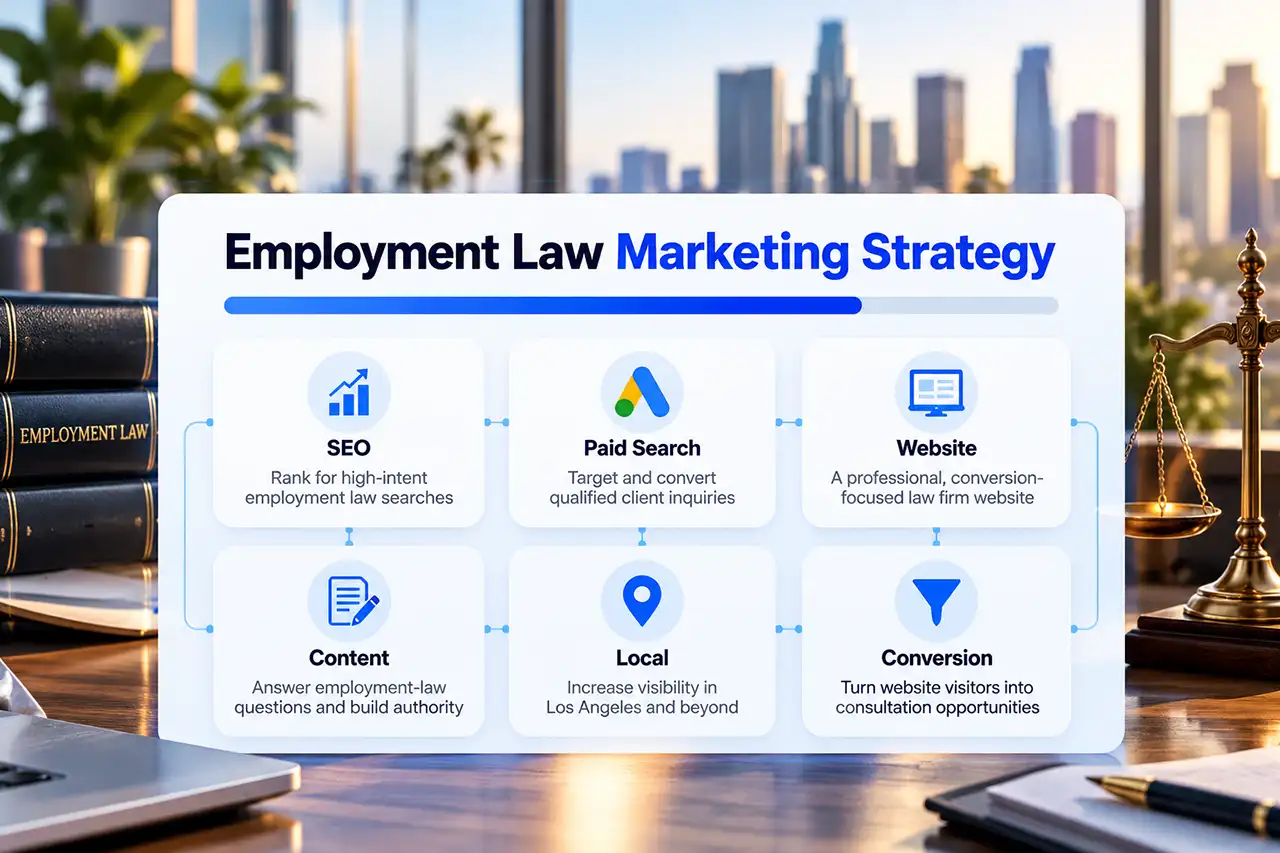
Search visibility, paid advertising, website experience, content and conversion should work together around the matters your firm handles and the clients you want to reach.
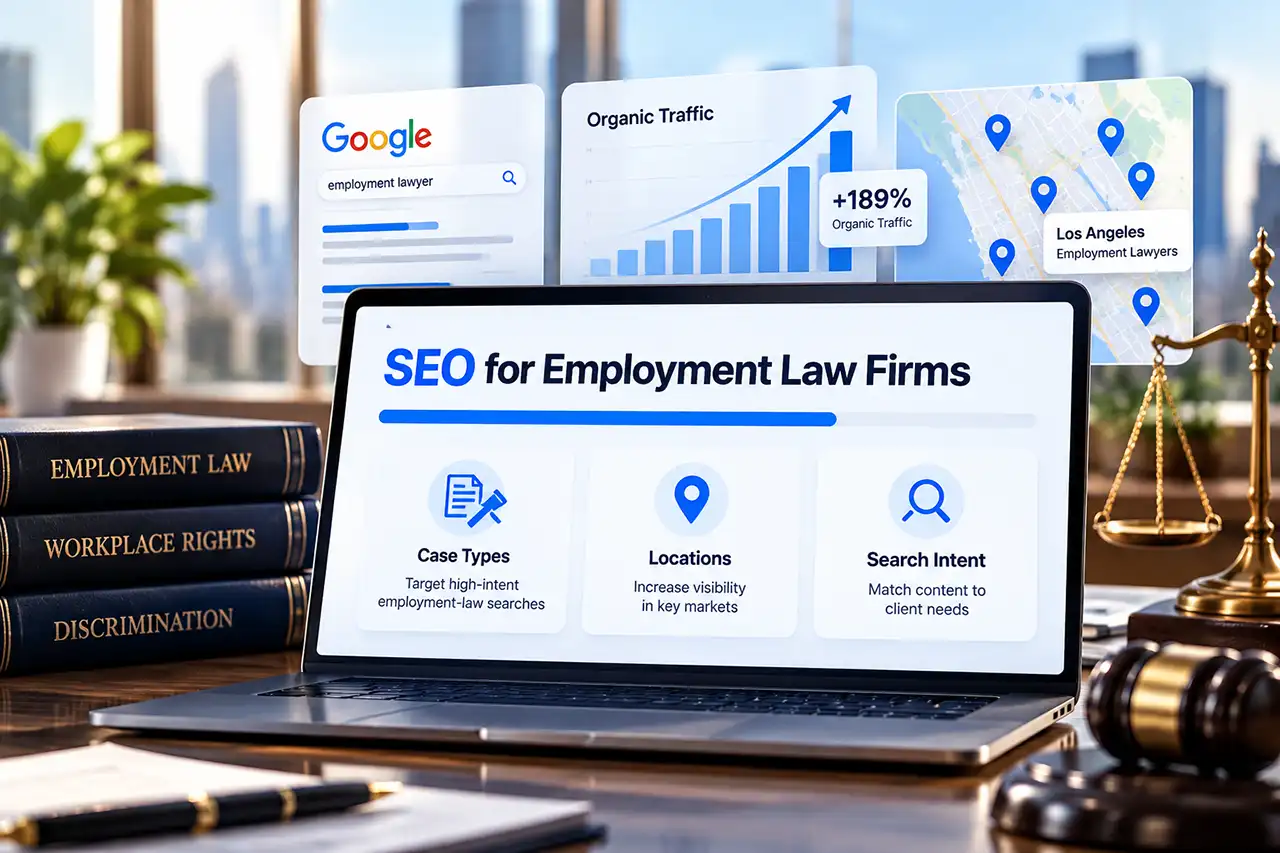
Build search visibility around the employment matters, locations and questions relevant to your firm’s actual services. The strategy can combine practice-area architecture, technical SEO, local signals, internal linking and useful educational content.
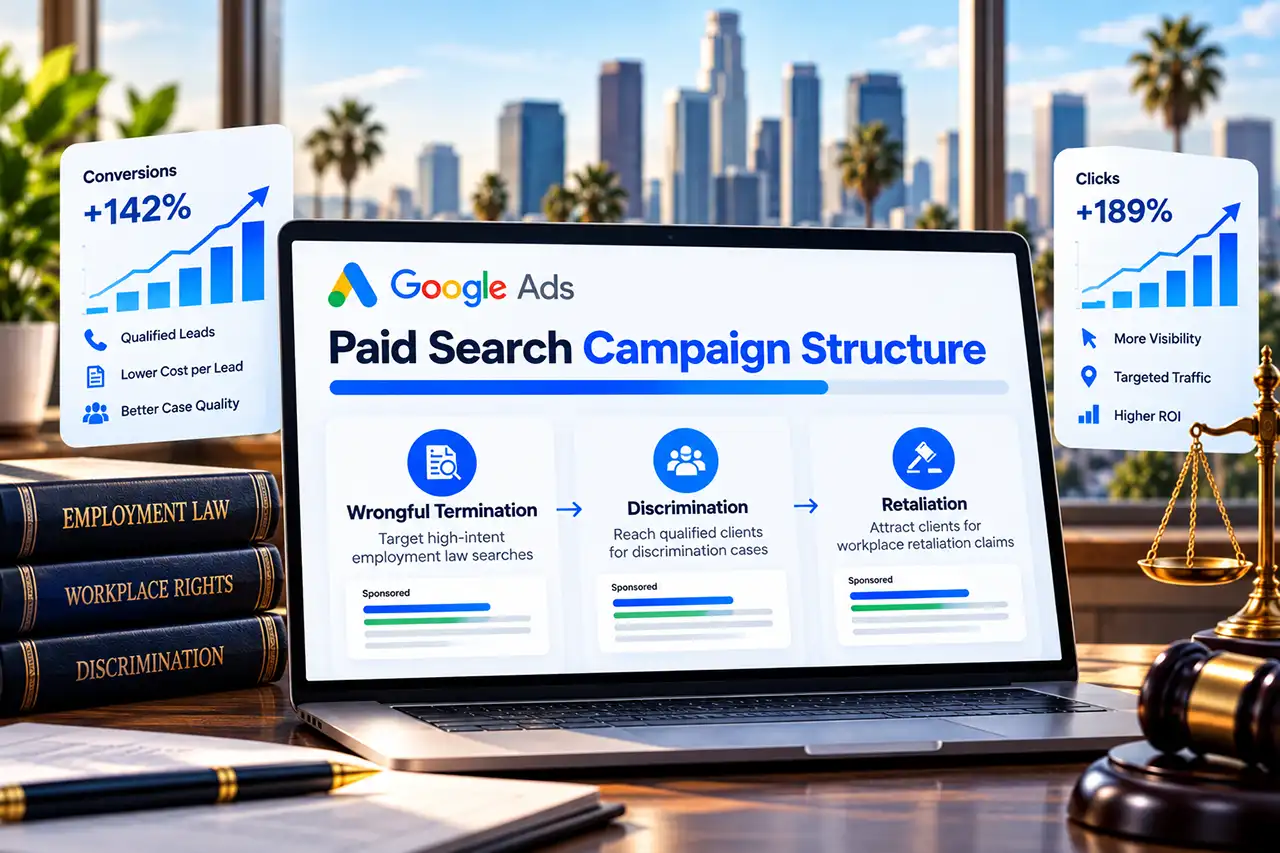
Paid search can connect your firm with people actively researching employment-law representation. Campaign structure should reflect case types, geographic markets and the landing pages most relevant to each search.
Your website should help prospective clients understand what your firm handles, who will represent them, where you serve and how to take the next step.

Useful content can meet prospective clients earlier in the research process and connect their questions with the firm’s relevant legal services.
Educational content addressing common questions around termination and legal options.
Content that helps users understand the issue and find the appropriate practice-area resource.
Clear topic clusters that connect informational searches with relevant legal services.
Local visibility for personal injury attorneys can involve the firm’s website, location architecture, Google Business Profile, local citations, reviews and consistent business information.
Employment-law prospects may compare several firms before reaching out. Clear attorney information, professional presentation and transparent consultation paths help reduce uncertainty.
Traffic only matters when the right prospective clients can take a clear next step. Conversion strategy should make it easy to call, submit a consultation request or reach the appropriate intake pathway.
Make the next step obvious throughout the site.
Reduce friction for users researching from a phone.
Collect enough information without overwhelming prospects.
Measure which channels and pages generate meaningful inquiries.
Your marketing architecture should reflect the matters your firm actually handles. Examples may include:
A structured approach that aligns your employment law services, target markets, search visibility, paid advertising, website experience and conversion strategy.
Review visibility, website, market and competitors.
Align case types, locations and search intent.
Improve campaigns, content and website pathways.
Track qualified calls, forms and search performance.
Use performance data to improve the strategy.
Local visibility for personal injury attorneys can involve the firm’s website, location architecture, Google Business Profile, local citations, reviews and consistent business information.
Firms serving multiple legitimate offices need a scalable structure connecting locations, practice areas, local search signals and conversion paths without creating thin or repetitive pages.
Rankings and visits are useful indicators, but the stronger measurement framework connects marketing activity with meaningful consultation opportunities.
Law firm marketing should support clear, accurate and professional communication about legal services. California firms should also review applicable professional advertising and communication requirements when publishing marketing content.
We bring search strategy, paid media, website experience, content and measurement together around the employment-law matters and markets your firm wants to grow.

You have questions; we have answers.
A connected strategy can include SEO, paid search, website experience, content, local visibility, reputation and conversion tracking around the firm’s actual employment-law services and markets.
SEO can build organic visibility for relevant case types, services, locations and employment-law questions through technical improvements, content, internal linking and local optimization.
They can complement each other: paid search can provide targeted visibility while SEO develops longer-term organic visibility, with both contributing useful search and conversion data.
The site should clearly organize case types, attorney information, locations, educational resources and consultation paths while supporting mobile usability and search visibility.
Useful measures include qualified calls and forms, conversion rates, organic visibility, paid-search performance, cost per qualified inquiry and the pages or case types producing meaningful opportunities.
Yes. A multi-location strategy can connect legitimate offices with relevant services, location pages and local search signals while maintaining a clear overall site structure.