- Real Growth. Proven SEO. Trusted Results.

Build visibility around the cases and markets your firm serves with a connected strategy for search, paid advertising, content, website experience and qualified client inquiries.
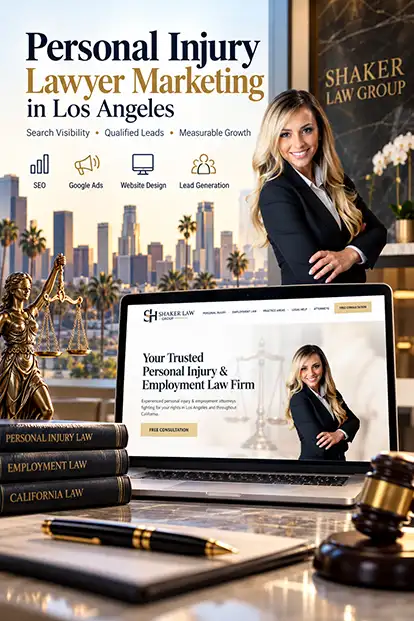
Built around the cases you handle
Connect organic and paid visibility
Clear paths from visit to inquiry
Track calls, forms and qualified leads
Someone looking for legal help after an accident may move quickly from a specific problem to local attorneys, firm comparisons and a consultation. Your marketing should connect those moments instead of treating SEO, advertising, content and the website as separate projects.
An accident or injury creates a reason to seek legal information or representation.
Prospective clients search by case type, attorney, location and immediate questions.
They compare firms, attorneys, experience, information, reviews and accessibility.
Clear phone, form and consultation paths help turn qualified interest into inquiries.
Personal injury firms compete in a market where search intent can be urgent, paid media can be expensive, and trust matters before a prospect ever speaks with an attorney.
Major injury and accident terms can attract strong competition from local, regional and national firms.
Prospects may need answers quickly, making accessibility and clear next steps especially important.
Car accidents, truck accidents, wrongful death and other matters can produce different searches and content needs.
Location, service area and office presence can shape how a firm competes across Los Angeles and surrounding markets.
Attorney profiles, useful information, professional presentation and accurate claims help prospects evaluate a firm.
Calls and forms need clear attribution and a practical path from marketing inquiry to firm intake.
The strongest plan connects visibility, advertising, content, website experience and measurement around the practice areas and markets your firm actually wants to grow.
Organic strategy around personal injury services, case types and relevant geographic searches.
Google Ads and paid search aligned with high-intent searches and dedicated conversion paths.
Practice-area architecture, useful content and mobile experiences that support client evaluation.
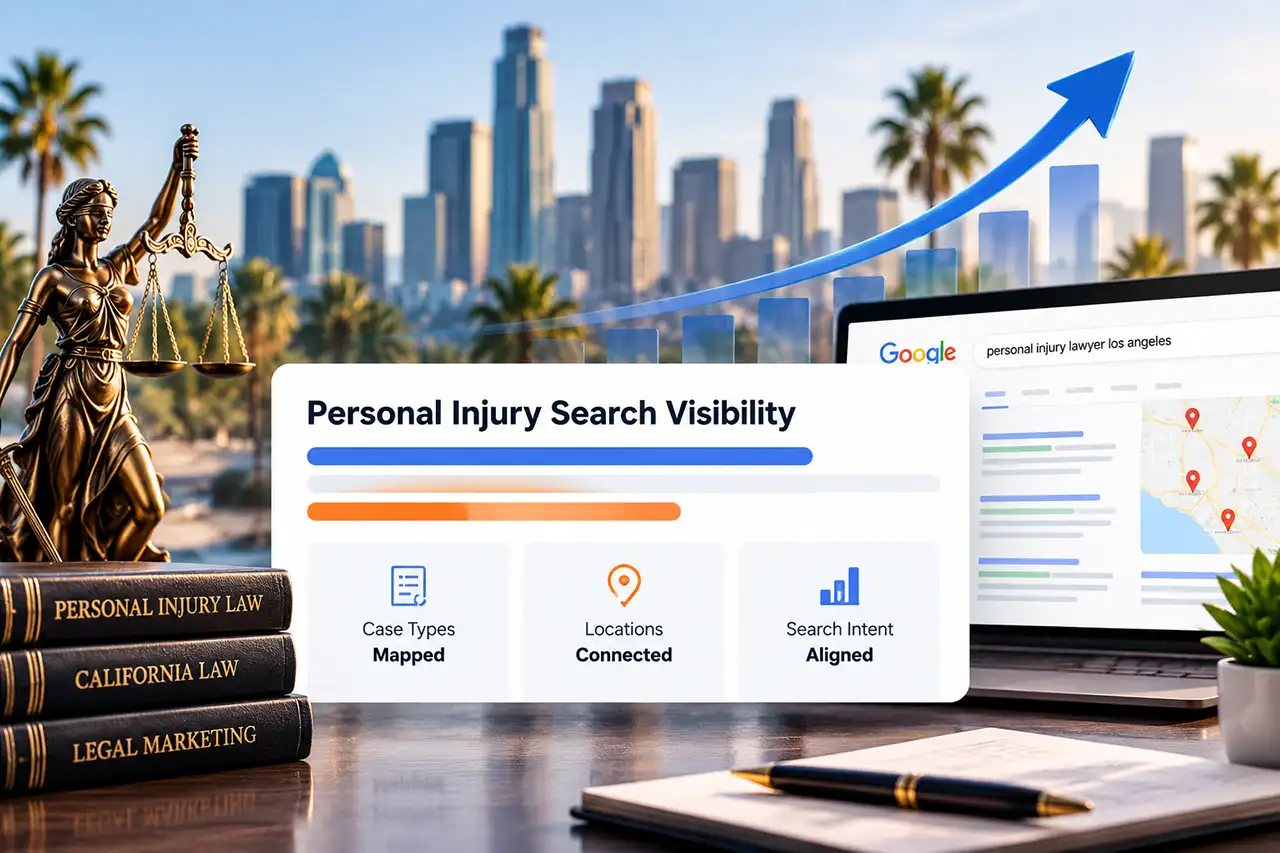
Personal injury SEO should be built around the cases your firm handles, the markets you serve and the questions prospective clients search before contacting an attorney.
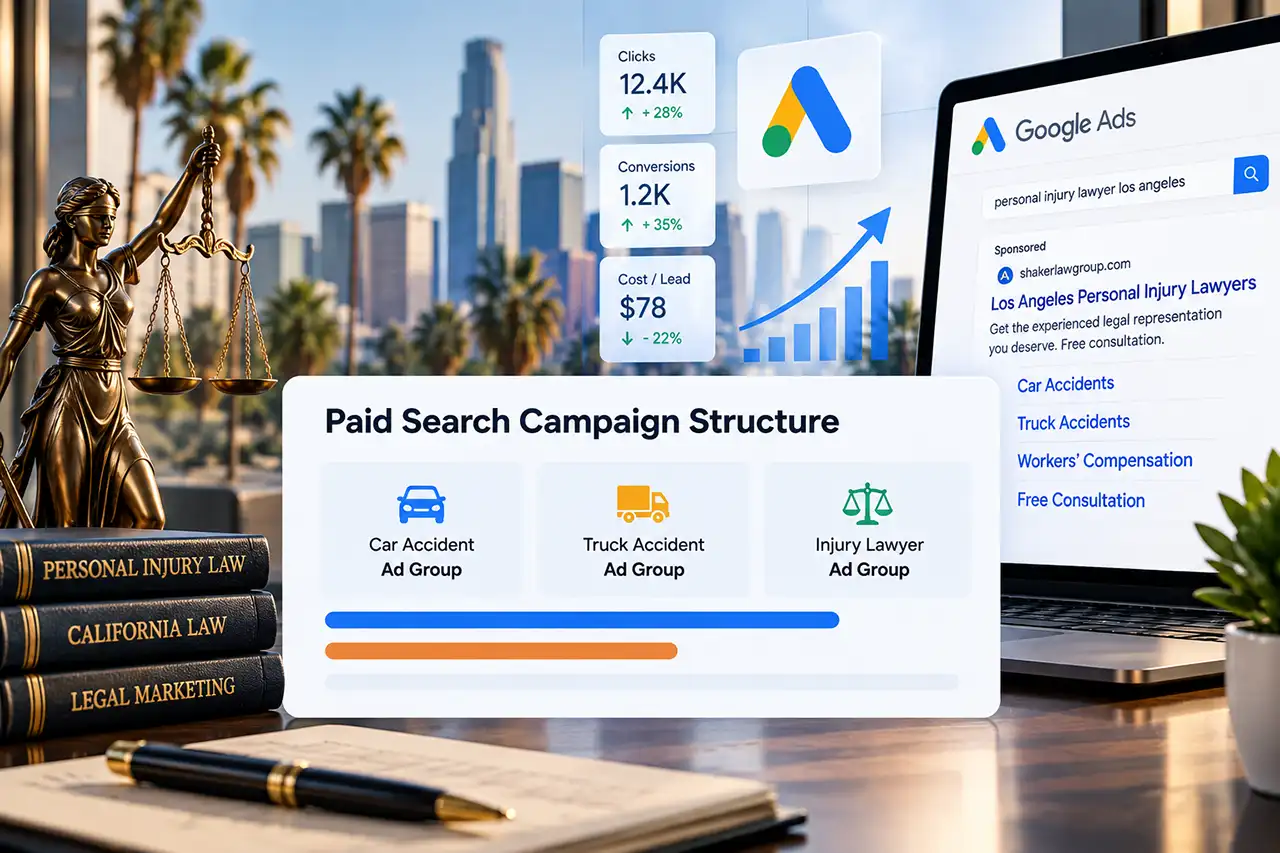
Paid search can place a firm in front of people actively looking for legal help. Campaign structure should connect search intent, geography, ad messaging and landing-page experience instead of sending every visitor to the same generic page.
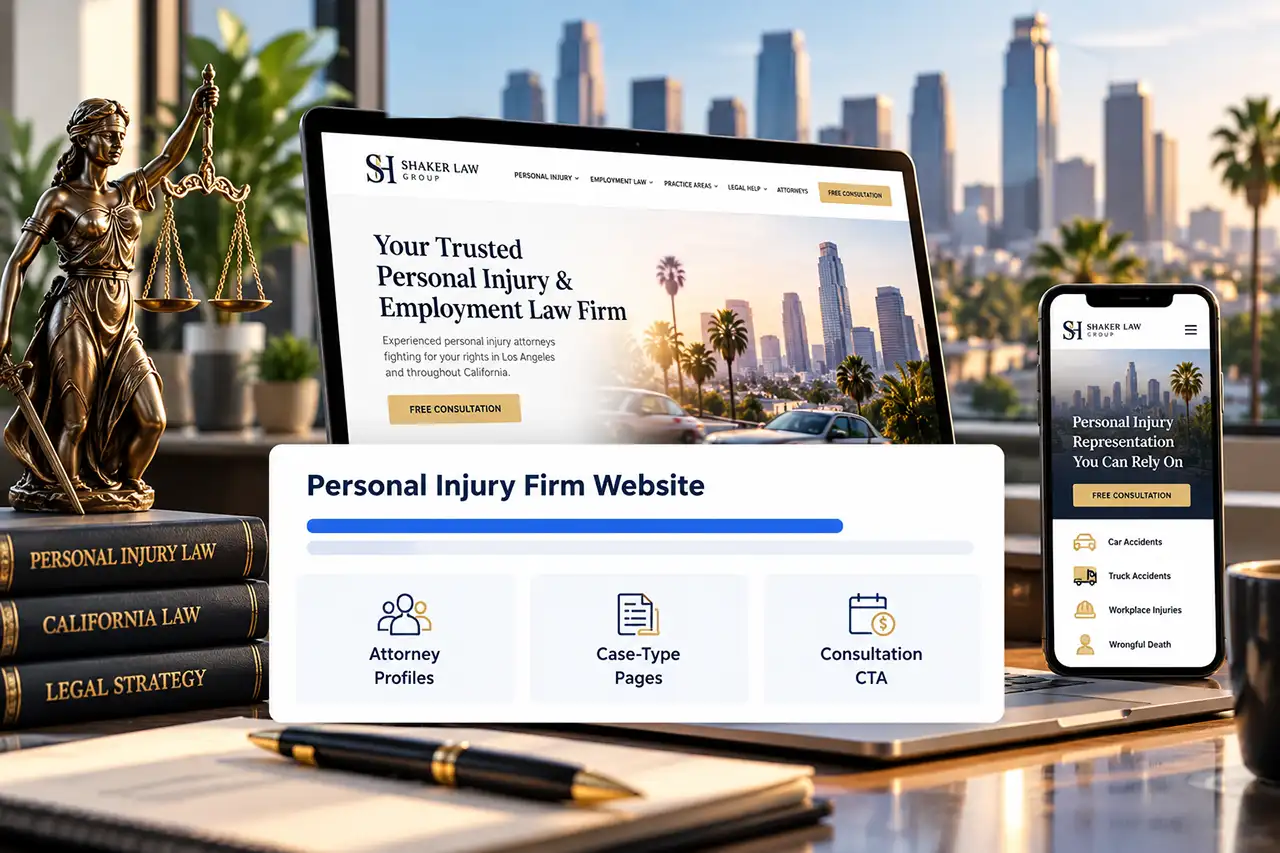
A personal injury website should make it easy to understand the firm’s services, attorneys, locations and consultation options across desktop and mobile devices.
Clear pathways to major case types.
Professional information and credentials.
Easy navigation, calls and forms.
Visible consultation and contact options.
Useful content can help a firm explain services, answer common questions and create clearer pathways between informational research and attorney evaluation.
Detailed pages for the matters the firm actually handles.
Market-specific information where the firm genuinely serves clients.
Articles and FAQs addressing common questions and legal-service research.
Link related case types, attorneys, offices and supporting resources naturally.
Local visibility for personal injury attorneys can involve the firm’s website, location architecture, Google Business Profile, local citations, reviews and consistent business information.
Prospective clients may compare several firms. Accurate attorney information, understandable service pages, appropriate testimonials or results, useful resources and a consistent brand experience can support that evaluation.
Law firm marketing should communicate services clearly without relying on misleading or unsubstantiated claims. Firms should review advertising statements, testimonials, case results and other marketing content against the professional rules applicable to their jurisdiction.
Traffic is only part of the picture. The website and measurement plan should help the firm understand which channels and pages generate meaningful calls and form submissions.
Make consultation and contact options visible without overwhelming the page.
Support click-to-call and concise forms for visitors on mobile devices.
Connect inquiries to organic search, paid media and other acquisition channels.
Evaluate lead quality alongside volume, cost and conversion rate.
Search behavior and competition can differ by matter. The site should reflect the firm’s actual services rather than creating pages for case types it does not handle.
Local intent • accident-specific questions • consultation pathways
Distinct search intent • complex case information • attorney evaluation
Case-specific visibility • educational content • local market relevance
Sensitive content • clear services • professional presentation
Service explanation • related questions • location relevance
Detailed information • attorney experience • consultation paths
Traffic is only part of the picture. The website and measurement plan should help the firm understand which channels and pages generate meaningful calls and form submissions.
Review website, analytics, Search Console, paid media, competitors and conversion paths.
Organize opportunities by case type, geography, search intent and acquisition channel.
Define content, SEO, paid media, website and measurement priorities.
Execute approved technical, content, advertising and conversion improvements.
Track visibility, calls, forms, qualified leads and campaign efficiency.
Use real performance data to improve targeting, content and conversion paths.
Los Angeles presents a large and competitive legal market. A personal injury firm may compete across individual neighborhoods, cities, counties or a broader Southern California footprint depending on its offices and actual service area.
We can structure search visibility, advertising and website architecture around the markets that matter to the firm rather than forcing every campaign into the same geographic model.
Firms with several offices need a clear relationship between locations, attorneys, practice areas and business profiles. The objective is to expand visibility without creating thin or duplicative location experiences.
Rankings and visits are useful indicators, but the business question is whether marketing is generating relevant opportunities for the firm.
Queries, pages and markets gaining meaningful search exposure.
Tracked inquiry actions tied to acquisition sources.
Review relevance and quality, not only raw volume.
Compare paid investment with meaningful conversion outcomes.
Los Angeles SEO Inc brings together search strategy, paid advertising, website experience, content and analytics so the firm’s digital channels can support one another.

This page owns the Personal Injury marketing specialization. Broader service expertise stays with the dedicated legal and marketing pages.
Organic visibility across legal services and relevant searches.
Broader acquisition strategy across paid, content, local and conversion channels.
Professional, mobile-friendly websites structured around legal services.
Explore other legal practice areas supported by Los Angeles SEO Inc.
Connect search visibility, paid advertising, website experience, content and measurement around the people, case types and markets your firm wants to reach.
You have questions; we have answers.
A personal injury marketing strategy should connect SEO, paid search, website experience, content, local visibility, reputation and conversion tracking around the firm’s actual case types and geographic markets. The right mix depends on the firm’s goals, competition, current visibility and client acquisition priorities.
SEO helps personal injury firms build organic visibility for relevant case types, legal services and geographic searches. This can include practice-area optimization, local SEO, technical improvements, content development, internal linking and ongoing performance analysis.
They can complement each other. Google Ads can provide paid visibility for selected high-intent searches, while SEO works to develop longer-term organic visibility. Using both also provides useful search-term and conversion data that can help refine the overall marketing strategy.
A personal injury website should make it easy for prospective clients to understand the firm’s practice areas, attorneys, locations and consultation options. Clear navigation, dedicated case-type pages, mobile usability, fast performance and prominent contact paths should support both search visibility and client conversion.
Performance should be measured beyond rankings and website traffic. Useful metrics include qualified calls and form submissions, conversion rates, organic search visibility, paid-search performance, cost per qualified inquiry and which practice areas, locations and landing pages generate meaningful opportunities.
Yes. Multi-location strategy can connect each legitimate office with relevant practice areas, location pages, Google Business Profiles and local search signals while maintaining a clear overall website structure. The goal is to expand local visibility without creating thin or duplicative location content.