You must have heard the term Domain Rating (also known as DR) during discussions involving the strategies to improve the ranking of sites. It is among those SEO metrics that are quite popular among SEO experts.
People often discuss it as ‘’it’s the one thing that will fix ranking.’’ However, this isn’t the case. But being aware of Domain Rating and how you can enhance it can give a real edge.
In this blog post, I’ll explain it in simple terms and share some practical and useful tips to improve the DR score. So, read until the end to know everything in detail.
What Is Domain Rating?
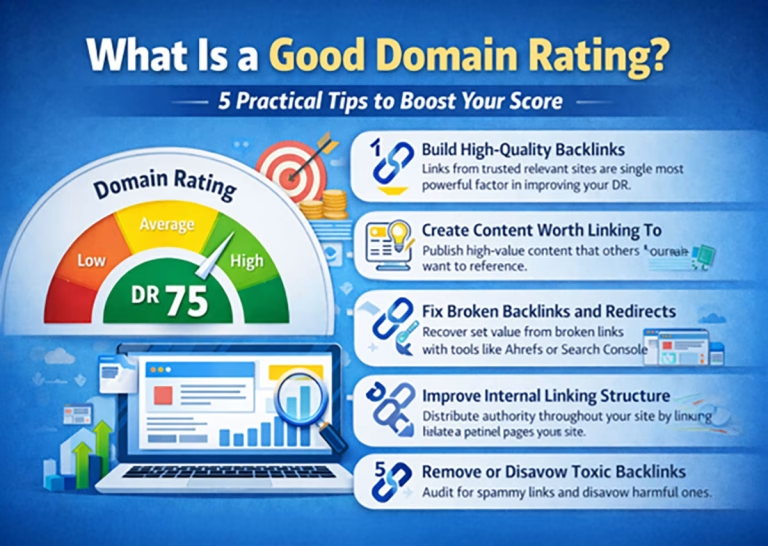
Domain Rating is a 0-100 score, with 0 being the least and 100 being the highest. It indicates the strength of the backlink profile of your website. Backlinks are links that are placed on other sites that point to your site. The concept is not complex: the more quality backlinks a site has, the more authoritative it will be perceived.
Let’s make it clear that the Domain Rating score isn’t from Google. It is from a popular SEO tool named “Ahrefs.” It does not have a direct impact on your rankings; however, it portrays something significant: the strength of your site relative to others in terms of quality backlinks.
Why Domain Rating Matters
Although it is not a factor that Google endorses, Domain Rating is important because:
- It assists you in comparing your site to the competitors.
- It demonstrates the presence of high-quality backlinks.
- A higher DR often correlates with higher organic traffic count.
These are a few reasons why Domain Rating is considered an important SEO metric. Site owners always strive to keep this score at high levels.
What is considered a Good Domain Rating Score?
Well, there isn’t any hard and fast rule. However, a higher score is considered good in most of the cases. It largely depends on your niche, goals, and competitors. That said, here’s a general guide explaining DR score:
0-20: New sites or sites that are starting with backlinks.
21-40: Medium-level authority in less competitive niches.
41-60: Good authority for most small and medium websites.
61-80: High authority, and it is usually observed in well-established brands.
81-100: Elite authority, which is characteristic of major global brands and media outlets.
Remember, this is relative. A site with a DR of 35 could be excellent in a small niche but mediocre within a competitive space.
5 Practical Tips to Increase Your Domain Rating
There is no shortcut to improving your Domain Rating overnight. You need to make your site actually link-worthy and create relationships that result in actual and organic backlinks. The following 5 tips can offer assistance in taking your DR to the next level.
Create Content that Naturally Generates Backlinks
Many people who are new to SEO think building backlinks means just contacting other site owners for backlinks. This is not wise. Instead, your focus should be on creating content that earns natural backlinks.
So, think beyond blog posts. Create:
- Original studies that businesses will refer to.
- Round-up posts to which you add quotes from experts.
- Real value tools or calculators that offer real value.
- Pages that will be used as references by others.
This type of content attracts links in a natural manner. And relevant sites with real traffic that link to your site are likely to pass more link juice than random directory links.
Target High-Value Link Partners
A website with a DR of 70 may appear to be a great target. But what you should actually consider is relevancy and the real audience.
An example of this is a niche blog with loyal readers and moderate DR, which can give you more traffic and more powerful contextual links than a big general site, which puts your link in a way that sounds promotional and awkward.
So before you contact a webmaster, check:
- Does their audience care about your content?
- Does the page on which you will be linked have contextual sense?
- Is the site itself getting traffic?
Remember high domain rating doesn’t beat relevancy and real engagement.
Audit and Clean Toxic Backlinks
Not all links are good. Some can drag your score down or make it harder for search engines to trust your site.
Audit your backlinks using backlink tools. Look for:
- Spammy directories
- Unrelated or irrelevant websites
- Sites in a foreign language that are not related to your niche
In case you think that your site has toxic links, you can check them with the help of domain rating checker and disavow them so that they no longer have an impact on your backlink profile. This strategy will help refine your backlink profile, improving your DR score.
Build Mutual Value with Smart Outreach
Cold pitching is no longer a very effective method, in which you write a few lines of copy and hope someone responds. Instead, think about who benefits from linking to you.
Here’s how to do that:
- Contact a blogger once he or she creates something related to your content.
- Or volunteer to add to their post something truly valuable (with your link).
- Collaborate with industry influencers on the collaborative content.
It is more of a conversation rather than a sales pitch.
Take Advantage of Your Internal Connections
Backlinks are valuable, but the way your site is organized also matters. One good page on a site and excessive orphaned content will not convey that authority. Ensure your internal links:
- Connect related content.
- Transfer authority from the strongest pages to the weaker ones of your site.
- Are natural and guide users through your site.
This does not increase your DR directly, but it increases the value that you have. It also facilitates the external links, benefiting more of your pages.
Final Thoughts
A good Domain Rating is not a universal number. It’s a score that reflects how strong your backlink ecosystem is compared with your competition. The real value comes from building a site that others want to link to, not from chasing rankings in dashboards.
Emphasize quality rather than quantity. Produce something worth referencing. Build real relationships. And make use of good tools that tell you where you are and where you need to go.
Your DR will rise as a result. And so will your visibility.