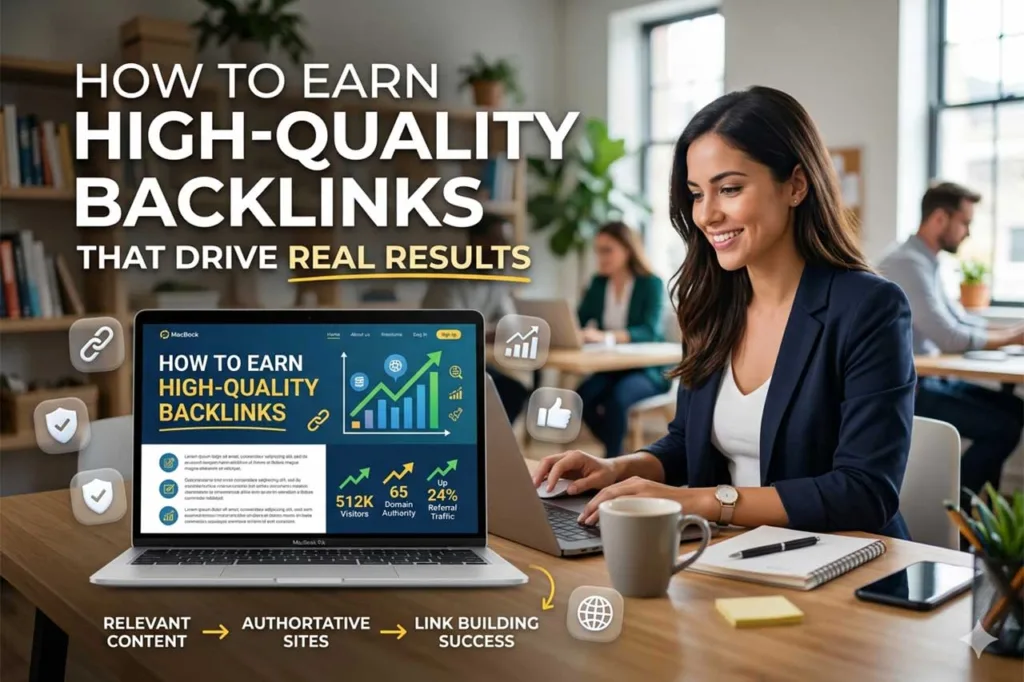
Backlinks remain one of Google’s top three ranking factors—but not all links are created equal. A single high-quality backlink from an authoritative domain can outperform dozens of low-quality ones. This guide breaks down exactly what makes a backlink “high-quality,” which earning strategies work best in 2026, and how to build a link profile that strengthens your site’s authority over time.
Key Takeaways
- High-quality backlinks come from authoritative, topically relevant websites—both domain authority and context matter.
- The most effective link-building strategies in 2026 include digital PR, guest posting, broken link building, and the Skyscraper Technique.
- Backlink quality consistently outweighs quantity; one strong editorial link beats 50 directory submissions.
- Internal linking supports your backlink strategy by distributing link equity across your most important pages.
- Tracking your backlink profile with tools like Ahrefs or Google Search Console helps you identify gains—and spot toxic links before they do damage.
What Makes a Backlink "High-Quality"?
A high-quality backlink is a link from an authoritative, trustworthy, and topically relevant website that passes meaningful ranking signals to your page. Google’s algorithm evaluates several factors when determining how much weight to give any given link.
The key characteristics of a valuable backlink include:
- Domain Authority (DA): Links from high-DA sites (think established news outlets, universities, and industry publications) carry more weight than links from new or low-traffic domains.
- Topical Relevance: A backlink from a marketing blog to an SEO agency carries far more value than a link from an unrelated niche, like a pet supply store.
- Placement: Editorial links embedded naturally within body content outperform links placed in footers, sidebars, or author bios.
- Anchor Text: Descriptive, relevant anchor text signals context to Google. Over-optimized, exact-match anchors, however, can trigger penalties.
- Dofollow vs. Nofollow: Dofollow links pass link equity directly. Nofollow links don’t pass equity in the same way, but a diverse, natural-looking link profile includes both.
According to Ahrefs’ analysis of over 1 billion web pages, 90.63% of pages get zero organic traffic from Google—and a lack of backlinks is one of the primary culprits.
Proven Strategies to Earn High-Quality Backlinks
1. Create Link-Worthy Assets (and Promote Them)
Content that earns backlinks organically tends to offer something genuinely rare: original data, in-depth guides, free tools, or visual assets like infographics. These are often called “linkable assets.”
Examples of high-performing linkable assets include:
- Original research and industry surveys
- Comprehensive how-to guides (like this one)
- Free calculators or templates
- Visual explainers and data-driven infographics
Creating the asset is only half the job. Outreach—contacting relevant sites, journalists, and bloggers who would benefit from linking to your resource—is what converts great content into actual links.
2. Use the Skyscraper Technique
Developed by Brian Dean at Backlinko, the Skyscraper Technique involves three steps: find content in your niche that has already earned many backlinks, create a significantly better version, and reach out to the sites that already link to the original piece.
This works because you’re targeting sites that have already demonstrated a willingness to link to this type of content. You’re not pitching a cold idea—you’re offering a clear upgrade.
3. Guest Posting on Relevant Publications
Guest posting, when done strategically, remains one of the most reliable ways to earn editorial backlinks. The key word is “strategically.” Submitting thin, generic content to low-quality blogs provides little SEO value and can even raise red flags.
Instead, target publications that:
- Have an engaged readership in your industry
- Maintain editorial standards (i.e., they don’t accept just any submission)
- Have a domain rating of 40 or higher
Pitch specific, data-backed article ideas rather than generic topics. Editors receive hundreds of pitches—specificity and relevance set yours apart.
For local SEO campaigns, guest posting on Los Angeles-based business publications and neighborhood news sites can also build geographic relevance. For more on this, see our guide to Local SEO Strategies for Los Angeles Businesses.
4. Broken Link Building
Broken link building is exactly what it sounds like. You find links on authoritative websites that point to pages that no longer exist (404 errors), then suggest your own relevant content as a replacement.
Tools like Ahrefs’ Broken Link Checker or Check My Links (a free Chrome extension) make finding these opportunities straightforward. Once you’ve identified a broken link, contact the site owner with a brief, helpful email that notes the broken link and suggests your resource as a replacement.
This approach positions your outreach as genuinely helpful rather than transactional—which dramatically improves response rates.
5. Digital PR and Data-Driven Story Pitching
Digital PR involves creating newsworthy stories—backed by data, surveys, or timely insights—and pitching them to journalists and media outlets. When a story lands, you earn high-authority links from publications that would otherwise be nearly impossible to reach through traditional outreach.
For example, an LA-based SEO agency might commission a survey on how small businesses in Los Angeles use digital marketing, then pitch the findings to local business journals and national marketing publications.
According to Moz’s Beginner’s Guide to Link Building, editorial links from digital PR campaigns consistently rank among the highest-value links a site can earn.
6. Build Links Through Reclamation
Brand mention reclamation is low-effort and often overlooked. Use tools like Google Alerts or Ahrefs Alerts to monitor mentions of your brand name across the web. When someone mentions your business without linking to your site, send a short, polite email asking them to add a link.
Similarly, if your images or data have been republished without attribution, request a link as proper credit.
What to Avoid When Building Backlinks
Some link-building tactics do more harm than good. Avoid the following:
- Buying links: Google’s guidelines explicitly prohibit paid links intended to manipulate rankings. Sites caught participating in link schemes risk manual penalties.
- Private Blog Networks (PBNs): Networks of low-quality sites built solely to pass link equity are a violation of Google’s Webmaster Guidelines.
- Irrelevant directory submissions: Submitting to hundreds of generic directories provides minimal value and can dilute your link profile.
- Over-optimized anchor text: A backlink profile dominated by exact-match anchor text looks unnatural and can trigger algorithmic or manual penalties.
For a deeper look at how these tactics affect your rankings, explore our breakdown of Common SEO Mistakes Los Angeles Businesses Make.
How to Track and Evaluate Your Backlink Profile
Earning backlinks without tracking them is like running a campaign without measuring results. Use the following tools to monitor your link profile:
| Tool | Best For | Cost |
|---|---|---|
| Google Search Console | Free backlink overview | Free |
| Ahrefs | In-depth link analysis & prospecting | Paid |
| Moz Link Explorer | DA scores & spam analysis | Freemium |
| SEMrush | Competitor link gap analysis | Paid |
Check your backlink profile monthly. Look for sudden drops in referring domains (a sign of lost links), new toxic links that need to be disavowed, and opportunities to recapture links from redirected or deleted pages.
Building Backlinks Is a Long Game—Start with the Right Foundation
High-quality backlinks don’t appear overnight, and shortcuts rarely hold up. The businesses that build durable search authority are those that invest in creating genuinely valuable content, building real relationships with publishers, and earning links through merit rather than manipulation.
Start with one strategy—whether that’s broken link building, a guest posting campaign, or a linkable asset—execute it consistently, and layer in additional tactics as your profile grows. If you want expert support building a backlink strategy tailored to your market, explore our SEO services for Los Angeles businesses.
Frequently Asked Questions
How long does it take to see results from link building?
Most link-building campaigns take 3 to 6 months to produce measurable improvements in rankings. This timeline depends on your domain’s current authority, the competitiveness of your target keywords, and the quality of the links you earn.
How many backlinks do I need to rank on the first page of Google?
There’s no universal number. The right benchmark is competitive: analyze the backlink profiles of pages currently ranking in the top 5 for your target keyword, and aim to match or exceed their link counts and quality.
Is guest posting still effective for SEO in 2026?
Yes—when done correctly. Google has clarified that guest posting for purely manipulative purposes (thin content, irrelevant placements) violates its guidelines. High-quality guest posts on reputable, relevant publications remain a legitimate and effective strategy.
What's the difference between earned and built backlinks?
Earned backlinks are links you receive without direct outreach—because your content is valuable enough that others cite it naturally. Built backlinks are acquired through active outreach, guest posting, or link-building campaigns. Both count, and a healthy backlink profile typically includes a mix of the two.
Should I disavow low-quality backlinks?
Only if you have a large volume of clearly spammy links that you believe are harming your rankings, or if you’ve received a manual penalty. Google’s John Mueller has stated that the algorithm is generally good at ignoring low-quality links, so disavow files should be used cautiously.