
LA restaurant website SEO is the process of optimizing your restaurant’s online presence to rank prominently in local search results and AI-powered discovery tools, directly driving more reservations and walk-ins. 88% of consumers search online before choosing a restaurant, and 75% never scroll past the first Google results page. That single statistic defines the stakes. If your restaurant does not appear on page one, most potential diners will never find you. This guide covers the technical, local, and content-based strategies that help LA restaurants improve rankings in 2026, including Google Business Profile, schema markup, Core Web Vitals, and local keyword targeting.
What technical SEO improvements most impact LA restaurant website rankings?
Technical SEO is the foundation of every other optimization effort. Without a fast, crawlable, mobile-friendly website, your local keywords and Google Business Profile work at a fraction of their potential.
PageSpeed and Core Web Vitals are the two most measurable technical signals. Google’s Core Web Vitals measure three things: loading speed (Largest Contentful Paint), visual stability (Cumulative Layout Shift), and interactivity (Interaction to Next Paint). Restaurants that improve PageSpeed scores from around 55 to 95+ can expect measurable ranking improvements within 60–90 days. That timeline is specific and useful because it tells you when to evaluate whether your changes are working.
How to audit your site with google PageSpeed insights
Google’s PageSpeed Insights is a free diagnostic tool that scores your site from 0–100 and identifies the exact issues holding you back. Run it on your homepage, menu page, and contact page separately. Each page has its own score, and menu pages are often the slowest because of unoptimized food photography.
The most common fixes for LA restaurant websites include:
- Compress images using formats like WebP instead of JPEG or PNG. Food photography is the biggest culprit for slow load times.
- Enable browser caching so returning visitors load your site faster.
- Minify CSS and JavaScript to reduce file sizes without changing how your site looks.
- Use a content delivery network (CDN) like Cloudflare to serve your site from servers closer to your visitors.
- Eliminate render-blocking resources by deferring non-critical scripts.
Mobile usability is equally non-negotiable. Google indexes the mobile version of your site first. If your reservation button is too small to tap on a phone, or your menu requires horizontal scrolling, Google notices and ranks you lower.
Pro Tip: After making technical fixes, set a calendar reminder for 60 days out and re-run Google PageSpeed Insights. Compare your before and after scores alongside your Google Search Console impressions to confirm the ranking lift.
How do you optimize local SEO for an LA restaurant?
Setting up and optimizing google business profile
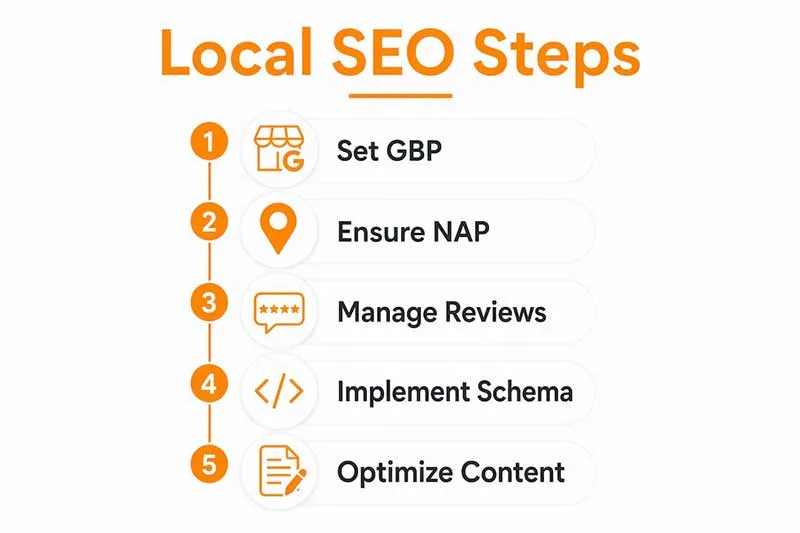
Local SEO for restaurants is built on three pillars: Google Business Profile (GBP), consistent citations across directories, and review management. Together, these signals tell Google your restaurant is a legitimate, active business in a specific Los Angeles neighborhood.
Setting up and optimizing google business profile
Follow these steps to get the most out of your GBP listing:
- Claim and verify your listing at Google Business Profile Manager. Verification usually requires a postcard sent to your physical address.
- Select the most specific primary category available, such as “Sushi Restaurant” rather than just “Restaurant.”
- Add all relevant attributes. Google lets you specify features like outdoor seating, Wi-Fi, wheelchair accessibility, and kid-friendliness. These attributes capture niche searches in a city as diverse as Los Angeles.
- Upload high-quality photos of your interior, exterior, dishes, and team. Listings with photos receive significantly more direction requests and website clicks.
- Keep your hours accurate, including holiday hours. Outdated hours are one of the fastest ways to lose trust with both Google and potential diners.
Complete and updated GBP listings with accurate categories and positive reviews improve map visibility and call-to-action conversions. This means more “Get Directions” clicks and phone calls directly from the search results page.
NAP consistency and local citations
NAP stands for Name, Address, and Phone number. Your NAP must be identical across every directory where your restaurant appears: Yelp, TripAdvisor, OpenTable, Foursquare, and local LA food blogs. Even small inconsistencies, like “Blvd” versus “Boulevard,” can dilute your local authority.
Acquiring and responding to reviews is the other half of local SEO. Ask satisfied diners to leave a Google review by sending a follow-up text or email with a direct link. Respond to every review, positive or negative. Google treats active review management as a signal of business engagement.
Pro Tip: Create a short URL using Google’s review link generator and print it on your receipts or table cards. This removes friction and increases the number of reviews you collect each month.
A comprehensive SEO approach that integrates website content, review management, and local directory listings has boosted the hospitality group’s organic traffic by up to 160% in three months. Siloed efforts simply do not produce those results.
Does schema markup really affect restaurant search visibility?
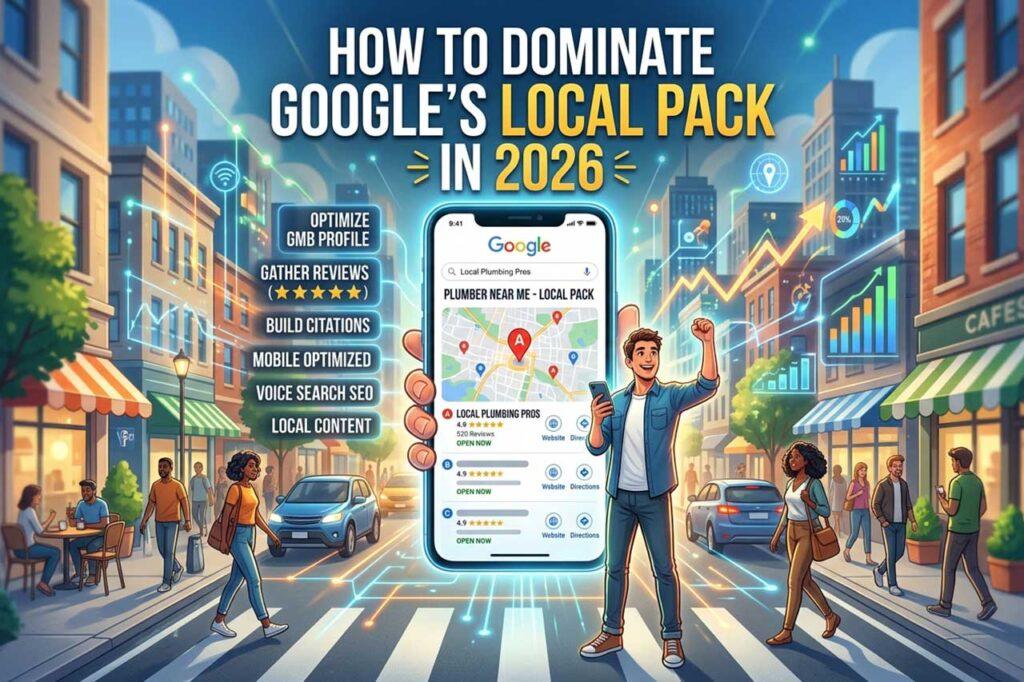
Schema markup is structured data code added to your website that helps search engines and AI models understand exactly what your business is. Schema markup for Restaurant, Menu, and LocalBusiness types is now critical to appear in AI-powered search results and Google AI Overviews. This is not optional in 2026.
Which schema types matter most for LA restaurants?
| Schema Type | What It Communicates | Why It Matters |
|---|---|---|
| Restaurant | Business name, cuisine, address, hours | Core identity for local search |
| Menu / MenuItem | Dish names, descriptions, prices | Enables dish-level search visibility |
| LocalBusiness | GeoCoordinates, phone, URL | Supports map and AI assistant results |
| OpeningHoursSpecification | Day-by-day hours, holiday hours | Prevents outdated info in search results |
A unified @graph JSON-LD structure that includes Organization, Menu, and GeoCoordinates types is parsed most accurately by search engines and AI models. JSON-LD is the preferred format because it sits in your page’s <head> tag and does not interfere with your visible content.
The most common and costly schema mistake is using a PDF menu. PDF and image-based menus are invisible to search engines. Google cannot read a PDF to understand that you serve wood-fired Neapolitan pizza in Silver Lake. Converting your menu to HTML is one of the highest-return technical fixes available to any LA restaurant.
Use Google’s Rich Results Test to validate your schema after implementation. If errors appear, fix them before moving on. Broken schema is worse than no schema because it can trigger manual review flags.
Pro Tip: If you use a CMS like WordPress, plugins like Rank Math or Schema Pro can generate restaurant schema automatically. For custom-built sites, use Google’s Structured Data Markup Helper to build your JSON-LD code manually.
How to build a keyword and content strategy for LA restaurants
Content optimization is where your technical foundation meets your local audience. The goal is to match the exact language LA diners use when searching for a place to eat.
Selecting the right la-specific keywords
Use tools like SEMrush or Google Keyword Planner to identify keywords that combine cuisine type, neighborhood, and intent. Local niche keywords like “vegan burger Los Angeles” or “best omakase Silver Lake” help AI search tools understand your restaurant’s context and relevance. Generic terms like “restaurant near me” are too competitive for most independent LA restaurants to rank for quickly.
Follow this process for on-page optimization:
- Write title tags under 60 characters that include your primary keyword and a call to action. Example: “Best Tacos in Echo Park | Order Online Today.”
- Write meta descriptions under 155 characters that describe the experience and include a secondary keyword. This text appears in search results and directly affects click-through rates.
- Use descriptive URLs like /menu/wood-fired-pizza instead of /page2 or /item-14.
- Structure your headers (H1, H2, H3) to reflect the questions your diners are asking. Your H1 should include your primary keyword. H2s can target related questions like “What neighborhoods do you serve?”
- Link between your pages to distribute authority. Your homepage should link to your menu, your menu should link to your reservations page, and your blog posts should link to relevant menu items.
Building local content that captures seasonal search traffic
| Content Type | Example Topic | Search Intent |
|---|---|---|
| Seasonal blog post | “Best Valentine’s Day Dinners in West Hollywood 2026” | Event-driven local search |
| Neighborhood guide | “Where to Eat in Los Feliz: Our Picks” | Discovery and brand authority |
| Menu update announcement | “New Summer Menu at [Restaurant Name]” | Returning customer engagement |
| Event page | “Live Jazz Nights Every Friday in Silver Lake” | Activity-based local search |
What i've learned running SEO for LA restaurants
The biggest mistake I see LA restaurant owners make is treating SEO as a checklist rather than a system. They fix their PageSpeed score, claim their Google Business Profile, and then wonder why rankings barely moved. The reason is almost always that these elements are not connected. Your website, your GBP, your citations, and your content need to reinforce the same signals about the same business in the same location.
The second pattern I see constantly is the image-only homepage. A beautiful full-screen photo of your dining room tells Google almost nothing. Search engines read text. If your homepage has 40 words and three images, you are handing your competitors a ranking advantage they did not earn.
Schema markup is the area where I see the biggest gap between what restaurants know they should do and what they actually implement. Most owners have heard of it but assume it is too technical. It is not. A single well-structured JSON-LD block covering your restaurant name, address, hours, cuisine type, and menu link can meaningfully improve how AI tools like ChatGPT and Google AI Overviews describe your business to potential diners.
The digital marketing strategies that work for LA restaurants in 2026 are not fundamentally different from what worked before. They are just more interconnected. Measure everything, update your content seasonally, and treat your Google Business Profile like a second website. The restaurants that do this consistently are the ones that show up first.
— Sasan Raeisi
How los angeles SEO inc helps LA restaurants rank higher
Los Angeles SEO Inc works directly with restaurant owners and managers across Los Angeles to build the kind of SEO infrastructure that drives real reservations and foot traffic.
The team at Los Angeles SEO Inc handles technical SEO audits, Google Business Profile management, schema implementation, local citation building, and content strategy. Every service is built around the specific competitive dynamics of the LA restaurant market. If you want to know exactly where your website is losing rankings and what it will take to fix it, request a free SEO audit today. Los Angeles SEO Inc delivers measurable results, not generic reports.
FAQ
What is LA restaurant website SEO?
LA restaurant website SEO is the practice of optimizing a restaurant’s website and online presence to rank higher in local Google search results and AI-powered discovery tools. The goal is to attract more diners in Los Angeles through organic search traffic rather than paid advertising.
How long does restaurant SEO take to show results?
Restaurants that improve their PageSpeed scores and fix technical issues can see ranking improvements within 60–90 days. Local SEO changes like GBP optimization and citation building typically show results within 30–60 days.
Why is schema markup important for restaurant SEO?
Structured data is now a primary factor for appearing in AI-powered search results and Google AI Overviews. Without schema markup, search engines and AI assistants have less context about your menu, hours, and location.
Should my restaurant menu be in HTML or PDF format?
Your menu must be in HTML format. PDF menus are invisible to search engines, which means Google cannot index your dishes or use them to match your site to relevant searches.
How does google business profile affect local restaurant rankings?
A complete and regularly updated Google Business Profile is one of the strongest local ranking signals available. Accurate categories, attributes, photos, and active review responses all contribute to higher placement in Google Maps and local search results.