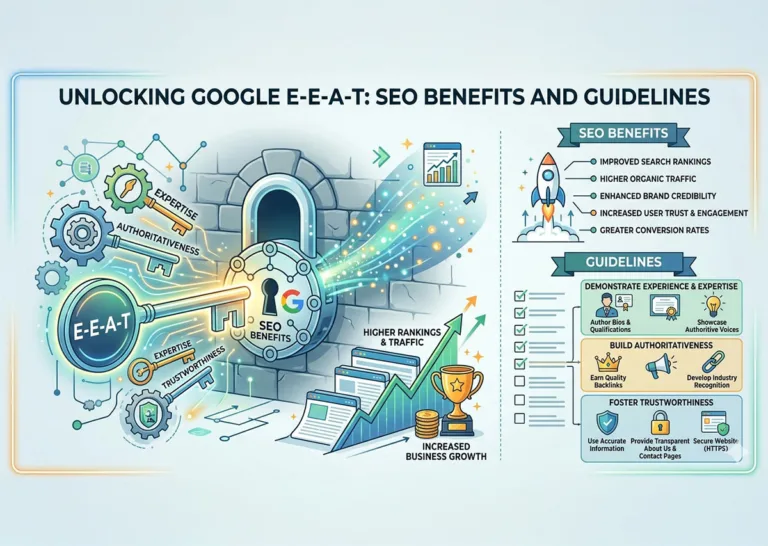
Google’s search algorithms update constantly, making it tough for website owners to keep up. However, one core concept remains central to how Google evaluates quality: E-E-A-T. This acronym stands for Experience, Expertise, Authoritativeness, and Trustworthiness. It serves as the primary framework that human quality raters use to evaluate the helpfulness of search engine results.
Understanding this framework is no longer optional for digital marketers and content creators. If your website lacks these trust signals, your pages will struggle to rank against competitors who actively demonstrate their credibility. Applying these principles helps you build a more robust, user-friendly website that search engines feel confident recommending to searchers.
This guide will break down each component of Google E-E-A-T, explain why it matters for your overall SEO strategy, and provide actionable steps to elevate your content’s quality.
The Core Components of E-E-A-T
To master Google’s quality guidelines, you need to understand exactly what each letter in the acronym represents.
Experience
Google recently added the extra “E” for Experience to emphasize the value of first-hand involvement. Readers want insights from someone who has actually engaged with the topic. If you are writing a review of a new smartphone, did you actually use the device, or are you just summarizing specifications from the manufacturer’s website? Sharing personal anecdotes, original photographs, and specific details proves you have real-world experience with the subject matter.
Expertise
Expertise focuses specifically on the content creator’s formal knowledge, qualifications, and skill level. The level of required expertise depends heavily on the topic. If you are publishing articles about tax law or medical treatments, you need verified professional credentials. For everyday topics, like a recipe for chocolate chip cookies, everyday expertise is perfectly acceptable. The goal is to ensure the person giving the advice actually knows what they are talking about.
Authoritativeness
While expertise concerns the creator’s knowledge, authoritativeness considers the overall reputation of your website and the author within a specific industry. Are you widely recognized as a go-to source for this topic? When other experts, established websites, or industry publications cite your work and link back to your domain, your authority naturally grows.
Trustworthiness
Trust is the most critical component of the entire framework. Google explicitly states that if a page is untrustworthy, it will have a low quality rating, regardless of how much experience, expertise, or authority it appears to have. Trustworthiness covers the accuracy of your content, the safety of your website, and the transparency of your business. A site with a deceptive layout, hidden contact information, or factually incorrect claims will fail this test.
Why E-E-A-T Matters for SEO
E-E-A-T is not a single, measurable ranking factor. There is no specific “score” assigned to your website in Google’s code. Instead, it is a collection of signals that algorithms use to identify content that provides genuine value to users.
This concept is especially critical for websites covering YMYL topics. YMYL stands for “Your Money or Your Life.” It encompasses any topic that could significantly impact a reader’s health, financial stability, safety, or happiness. Medical blogs, financial advisory sites, news outlets, and e-commerce stores fall squarely into this category. Google holds YMYL pages to the highest possible E-E-A-T standards because bad information in these areas can cause real harm.
Even if you do not operate a YMYL website, demonstrating E-E-A-T provides immense SEO benefits. It builds user confidence, reducing bounce rates and increasing the time visitors spend on your pages. High-quality, trustworthy content also naturally attracts more backlinks and social shares, which are powerful drivers of organic search visibility.
Actionable Guidelines to Improve Your E-E-A-T
Improving your website’s quality signals requires a strategic approach to content creation and site management. Here are several practical steps you can take to boost your credibility.
Highlight Author Credentials
Never publish content anonymously. Always include detailed author bylines on your blog posts and articles. A good author bio should mention the writer’s qualifications, professional background, and links to their social media profiles or personal portfolios. Consider creating dedicated author pages that list all the articles a specific expert has written for your site.
Keep Content Accurate and Updated
Stale information hurts trust. What was considered best practice two years ago might be completely obsolete today. Schedule regular audits of your existing content to ensure all data, statistics, and advice remain factually accurate. When you update a post, add an “Editor’s Note” or a “Last Updated” date at the top of the page so readers know the information is current.
Make Contact Information Easy to Find
Transparency is a major factor in building trust. Visitors should never have to dig around to figure out who owns your website or how to reach you. Include a clear “About Us” page that explains your company’s mission and history. Make sure your “Contact” page includes a valid email address, a physical location (if applicable), and active customer service channels.
Earn High-Quality Backlinks
Search engines look at the company you keep. Earning backlinks from highly reputable, authoritative websites in your niche signals that others endorse your content. Focus on publishing original research, comprehensive data studies, and unique thought leadership pieces that naturally attract links from industry peers.
Frequently Asked Questions About E-E-A-T
Is E-E-A-T a direct ranking factor?
No, E-E-A-T is not a direct ranking factor like page speed or keyword usage. It is a concept used by Google’s human quality raters to evaluate search results. The algorithms are then trained to recognize patterns and signals that align with these human assessments.
Does E-E-A-T apply to every type of website?
Yes, it applies to all websites, but the standards vary. A hobby blog about knitting will not be held to the same rigorous standards of expertise and authority as a website offering investment advice or medical diagnoses.
How long does it take to build authority?
Building a strong reputation takes time. You cannot manufacture trust overnight. Consistently publishing high-quality, accurate content and steadily earning mentions from other reputable sites will gradually improve your authority over months and years.
Future-Proof Your Content Strategy
Adapting to Google’s quality guidelines is the best way to protect your website from future algorithm updates. By prioritizing Experience, Expertise, Authoritativeness, and Trustworthiness, you shift your focus away from manipulating search engines and toward serving the actual human beings reading your content.
Start by auditing your most popular pages today. Check them for factual accuracy, ensure your author credentials are prominently displayed, and make sure your website clearly communicates who you are and why you can be trusted. Committing to these principles will yield higher rankings, better user engagement, and a stronger brand reputation.