
Boost your online presence with our local SEO guide for LA businesses. Attract more customers & grow your brand. Learn how to rank higher in local search.
Los Angeles is home to over 500,000 small businesses, all competing for attention in one of the most crowded markets in the country. Whether you run a boutique in Silver Lake, a restaurant in Santa Monica, or a law firm in Downtown LA, standing out online isn’t optional anymore—it’s essential.
That’s where local SEO comes in. Local search engine optimization helps your business show up when potential customers in your area search for products or services you offer. When someone types “best tacos near me” or “plumber in Burbank” into Google, local SEO determines whether your business appears in those results.
This guide will walk you through everything you need to know about local SEO in Los Angeles. You’ll learn why it matters, how to optimize your online presence, and what strategies actually work in such a competitive city. By the end, you’ll have a clear roadmap to help your business get found by more local customers.
Why Local SEO Matters for LA Businesses
Los Angeles spans over 500 square miles and includes dozens of distinct neighborhoods, each with its own personality and customer base. Someone searching for a coffee shop in Venice has very different expectations than someone looking for one in Pasadena. Local SEO helps you connect with the right people in the right neighborhoods.
Here’s why it’s so important:
Mobile searches drive foot traffic. Studies show that 76% of people who search for something nearby on their phone visit a business within 24 hours. In a city where people are constantly on the move, showing up in mobile search results can directly impact your bottom line.
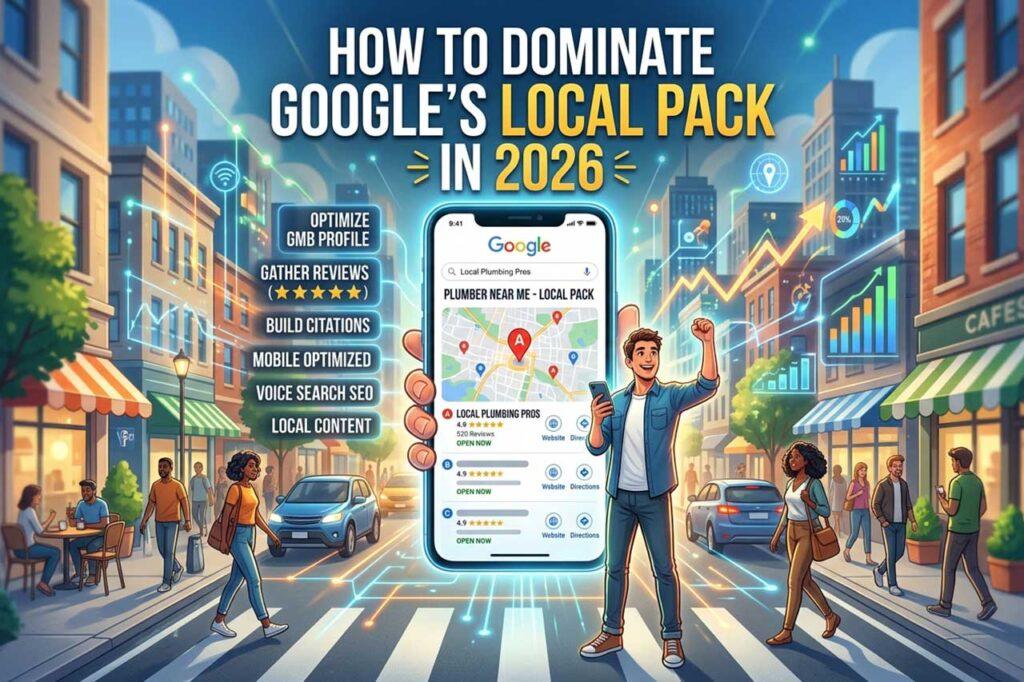
Google prioritizes local results. When someone searches for a service or product with local intent, Google shows a “Local Pack”—the map and three business listings at the top of the search results. Landing in that pack puts you ahead of organic search results and gives you prime visibility.
Competition is fierce. With so many businesses vying for attention, simply having a website isn’t enough. Local SEO helps level the playing field, allowing smaller companies to compete with larger brands by targeting specific neighborhoods and search queries.
Setting Up Your Google Business Profile
Your Google Business Profile (formerly Google My Business) is the foundation of your local SEO strategy. It’s what shows up in Google Maps, the Local Pack, and the knowledge panel on the right side of search results.
Claim and Verify Your Profile
If you haven’t already, claim your Google Business Profile at business.google.com. Google will verify your business, usually by sending a postcard with a verification code to your business address. This step is crucial—unverified profiles won’t show up in local search results.
Complete Every Section
Fill out every field in your profile. Include your business name, address, phone number (NAP), website, hours of operation, and categories. The more information you provide, the better Google can match your business to relevant searches.
Choose your primary category carefully. If you run a pizza restaurant, select “Pizza Restaurant” rather than just “Restaurant.” You can add secondary categories too, but your primary category has the most weight.
Add Photos and Videos
Businesses with photos receive 42% more requests for directions and 35% more clicks to their websites. Upload high-quality images of your storefront, interior, products, and team. If you can, add videos—they stand out in search results and give potential customers a better sense of what you offer.
Post Regular Updates
Google Business Profile lets you share updates, offers, and events. Posting regularly signals to Google that your business is active, which can improve your rankings. Share new menu items, special promotions, or upcoming events to keep your profile fresh.
Optimizing Your Website for Local Search
Your website plays a major role in local SEO. Google looks at your site to understand what you offer and where you’re located. Here’s how to optimize it for local search.
Include Location-Specific Keywords
Incorporate keywords that mention Los Angeles or specific neighborhoods you serve. Instead of just targeting “wedding photographer,” aim for “wedding photographer in Los Angeles” or “Santa Monica wedding photographer.”
Use these keywords naturally in your:
- Page titles
- Meta descriptions
- Headers (H1, H2, H3)
- Body content
- Image alt text
Create Location Pages
If you serve multiple areas in LA, create separate pages for each location. For example, a cleaning service might have pages for “House Cleaning in Westwood,” “House Cleaning in Culver City,” and so on. Each page should include unique content about that area and how your services meet local needs.
Add Schema Markup
Schema markup is code that helps search engines understand your website content. The local business schema tells Google important details about your business, such as your address, phone number, and hours. You can generate schema markup using tools like Schema.org or hire a developer to add it to your site.
Make Your Site Mobile-Friendly
More than half of all local searches happen on mobile devices. If your website isn’t mobile-friendly, you’re losing customers. Use Google’s Mobile-Friendly Test to check your site and make improvements if needed. Fast loading times, easy navigation, and clickable phone numbers are essential.
Building Local Citations
Citations are online mentions of your business name, address, and phone number. They help Google verify that your business is legitimate and that it is located where you say it is. Consistent citations across the web boost your local SEO rankings.
Start with Major Directories
List your business on popular directories like:
- Yelp
- Bing Places
- Apple Maps
- Yellow Pages
- Foursquare
Make sure your NAP (name, address, phone number) is identical across all listings. Even small discrepancies, like using “St.” on one site and “Street” on another, can confuse search engines.
Target LA-Specific Directories
Look for directories specific to Los Angeles or your industry. Examples include the Los Angeles Chamber of Commerce, LA Weekly’s business directory, or neighborhood-specific sites like Discover Los Angeles. These local citations carry extra weight because they’re relevant to your area.
Monitor Your Citations
Use tools like Moz Local, BrightLocal, or Whitespark to track your citations and identify inconsistencies. Clean up duplicate listings and correct any errors to maintain a strong local SEO foundation.
Earning and Managing Reviews
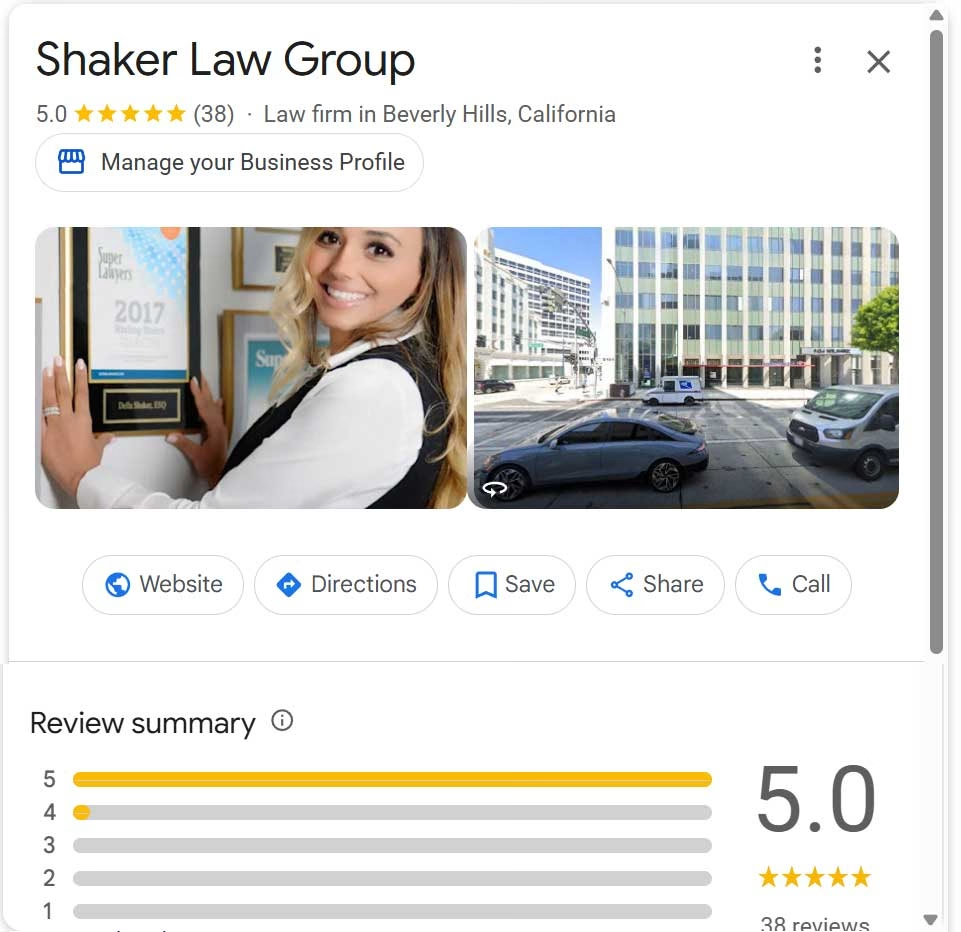
Online reviews are among the most important ranking factors in local SEO. They also influence whether potential customers choose your business over a competitor.
Ask for Reviews
Don’t be shy about asking satisfied customers to leave a review. Send a follow-up email after a purchase or service, or include a link to your Google Business Profile in your email signature. Make it as easy as possible by providing a direct link to your review page.
Respond to Every Review
Responding to reviews—both positive and negative—shows that you value customer feedback. Thank customers for positive reviews and address concerns in negative ones. This not only improves your reputation but also signals to Google that you’re an engaged business owner.
Diversify Your Review Platforms
While Google reviews are the most important, having reviews on other platforms like Yelp, Facebook, and industry-specific sites adds credibility. Encourage customers to leave reviews on multiple platforms to build a well-rounded online reputation.
Creating Locally Relevant Content
Content marketing helps you rank for more keywords and establish your business as a local authority. Focus on topics that matter to your LA audience.
Write About Local Events and Trends
Create blog posts or guides related to Los Angeles. A fitness studio might write “5 Outdoor Workouts to Try in Griffith Park,” while a bakery could share “Where to Find the Best Pastries in Los Angeles.” This type of content attracts local traffic and encourages backlinks from other LA websites.
Highlight Customer Stories
Feature testimonials or case studies from local customers. This builds trust and reinforces your connection to the community. Plus, mentioning specific LA neighborhoods in these stories can help you rank for hyper-local searches.
Optimize for Voice Search
Voice search is growing, especially for local queries. People often use conversational phrases like “Where’s the nearest coffee shop?” or “What time does the bakery close?” Optimize your content to answer these types of questions by including FAQs and natural language on your site.
Building Local Backlinks
Backlinks from reputable websites signal to Google that your business is trustworthy. Focus on earning links from other LA-based sites.
Partner with Local Businesses
Collaborate with complementary businesses in your area. A florist might partner with a wedding venue, or a gym could team up with a health food store. These partnerships can lead to guest blog posts, joint events, or simple link exchanges.
Sponsor Local Events or Charities
Sponsoring community events or local nonprofits often earns you a backlink from their website. It’s also a great way to give back to your community and increase brand awareness.
Pitch to Local Media
Reach out to LA-based blogs, news outlets, and magazines. Offer to provide expert commentary, share a unique story, or contribute a guest article. Media coverage not only brings backlinks but also drives traffic and builds credibility.
Tracking Your Local SEO Performance
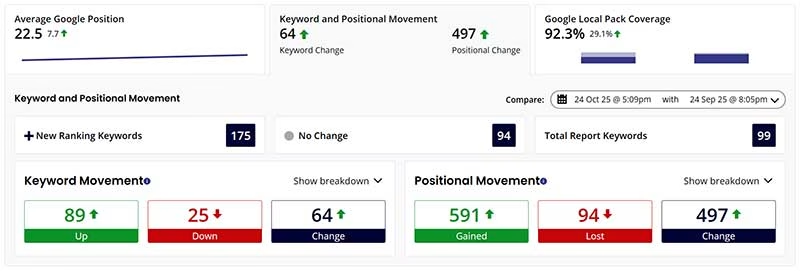
You can’t improve what you don’t measure. Use these tools to track your progress and identify areas for improvement.
Google Analytics
Set up Google Analytics to monitor website traffic, user behavior, and conversions. Pay attention to which pages get the most traffic and where your visitors are coming from.
Google Search Console
Google Search Console shows you which keywords your site ranks for and how often it appears in search results. Use this data to refine your keyword strategy and fix any technical issues.
Local SEO Tools
Platforms like BrightLocal, Moz Local, and SEMrush offer features specifically for tracking local SEO performance. These tools monitor your rankings, citations, reviews, and more, giving you a comprehensive view of your local search presence.
Common Local SEO Mistakes to Avoid
Even small mistakes can hurt your local SEO efforts. Here are a few pitfalls to watch out for:
- Inconsistent NAP information. Make sure your name, address, and phone number are the same everywhere online. Inconsistencies confuse search engines and hurt your rankings.
- Ignoring negative reviews, leaving negative reviews unanswered damages your reputation. Always respond professionally and try to resolve the issue.
- Stuffing keywords. Overloading your content with keywords makes it hard to read and can result in penalties from Google. Use keywords naturally and focus on creating valuable content.
- Neglecting mobile optimization. A slow or poorly designed mobile site will drive potential customers away. Prioritize mobile usability to capture local search traffic.
Take Control of Your Local SEO Strategy
Local SEO isn’t a one-time task—it’s an ongoing effort that pays off over time. Start by claiming and optimizing your Google Business Profile, then move on to building citations, earning reviews, and creating locally relevant content. Track your progress, adjust your strategy, and stay consistent.
Los Angeles is a massive market with endless opportunities.
With the right local SEO tactics, your business can rise above the competition and connect with more customers in your area. The sooner you start, the sooner you’ll see results.