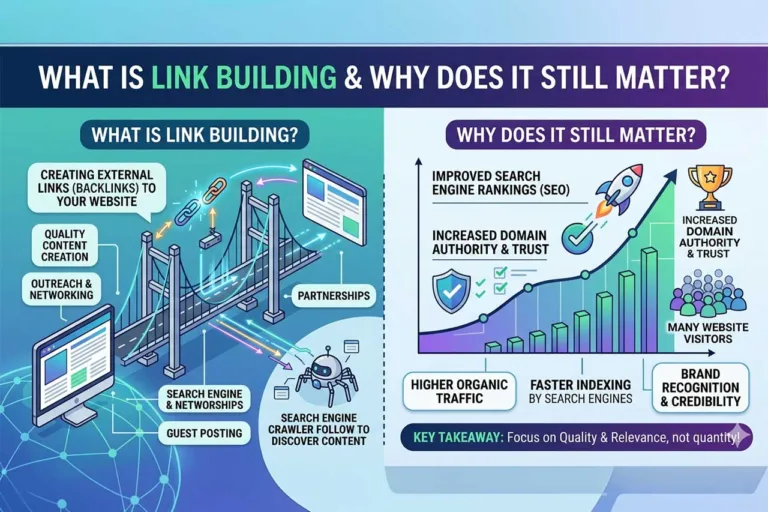
Link building is the practice of acquiring hyperlinks from other websites to your own to improve search engine visibility. Search engines like Google use these links to discover new web pages and determine how well a page should rank in their results.
This guide explains the mechanics of modern link building, why high-quality backlinks remain a top ranking factor, and the safest strategies to earn them.
In short, Link building acts as a digital voting system. When a reputable website links to your domain, search engines interpret that connection as a signal of authority and trustworthiness, directly boosting your organic search rankings.
Key Takeaways
- Quality beats quantity: One backlink from a high-authority domain is worth exponentially more than dozens of links from low-quality or spam sites.
- Backlinks drive organic traffic by signaling trust and credibility to search engine algorithms.
- Creating highly linkable assets, such as original research or comprehensive guides, is the most sustainable way to earn editorial links.
Why is link building still a ranking factor for search engines?
Link building remains a primary ranking factor because search engines rely on external links to evaluate a website’s authority, credibility, and relevance.
Google’s original algorithm was built on evaluating backlinks to understand relationships among web pages. While the algorithm has evolved significantly over the past two decades, the core principle remains unchanged. High-quality backlinks are consistently among the strongest ranking signals because they act as independent endorsements of your content. When you partner with a digital marketing company for Search Engine Optimization, earning these endorsements is a core part of the strategy.
According to Google Search Central documentation, if other prominent websites on the subject link to the page, that is a strong sign that the information is of high quality. Search algorithms cannot read a page and instantly know it is factual, so they rely heavily on how other human webmasters treat it.
How do search engines evaluate link quality?
Search engines evaluate link quality based on domain authority, topical relevance, and editorial placement. A link placed naturally within the body content of a site related to your industry carries the maximum amount of weight.
Not all links pass the same amount of value. Webmasters use specific HTML attributes to tell search engines how to treat a hyperlink. The table below outlines the differences between the most common types of links.
| Link Attribute | How Search Engines Treat It | Best Used For |
|---|---|---|
| DoFollow (Default) | Passes authority and ranking value. | Natural editorial links, resource pages, and digital PR. |
| NoFollow | Does not explicitly pass ranking value. | Untrusted content or comments where you cannot vouch for the destination. |
| Sponsored | Indicates the link is an advertisement. | Paid placements, affiliate links, or sponsored posts. |
| UGC (User Generated) | Identifies content created by site users. | Forum posts, blog comments, and community discussions. |
What are the safest link building strategies for modern SEO?
The safest link-building strategies rely on creating valuable content that naturally attracts citations from other webmasters and journalists.
Instead of manipulating algorithms with artificial links, successful businesses focus on asset creation. This means publishing original data, comprehensive guides, or unique infographics. When writers and journalists need a source for their articles, they link to these assets. To support this approach, many organizations invest in professional Content Marketing services to ensure they publish material worthy of citation.
Another safe strategy is digital PR. Digital PR involves distributing newsworthy press releases or company updates to journalists. When prominent news publications cover your story, they typically provide a highly authoritative backlink to your website.
When should a business choose targeted outreach over passive link acquisition?
Choose manual email outreach if you have a highly targeted piece of content that directly solves a problem for a specific audience. Choose passive acquisition if you want to generate broad, top-of-funnel links over a longer period.
Manual outreach involves emailing site owners and pitching your content as a resource for a specific page on their website. This requires significant time but yields specific placements. Passive link acquisition relies on ranking well for informational queries (like “SEO statistics 2026”) so that writers naturally find and cite your page while doing research.
How does local link building differ from national campaigns?
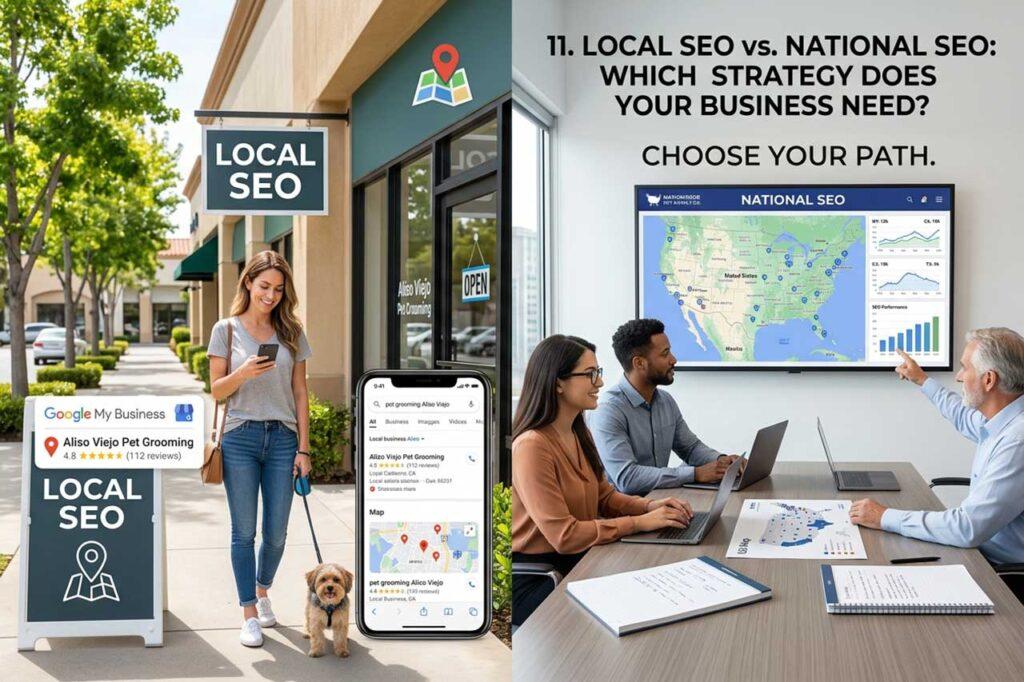
Local link building prioritizes geographic relevance over broad domain authority. While a national e-commerce brand wants links from major publications like Forbes or The New York Times, a local roofing company benefits more from links provided by the local Chamber of Commerce, regional news outlets, or neighborhood blogs.
These hyper-local links tell search engines exactly where the business operates. If you want to dominate map packs and regional searches, specialized Local SEO strategies focus heavily on these localized citations.
Next steps for scaling your backlink profile
Building a healthy backlink profile requires patience, high-quality content, and consistent effort. To get started, audit your website’s existing content to identify pieces that could serve as linkable assets. Update outdated statistics, improve formatting, and ensure your pages load quickly. Next, research unlinked brand mentions—places where websites mention your company name but do not link to your site—and kindly ask those webmasters to add a hyperlink.
Frequently Asked Questions
How much does professional link building cost?
Professional link-building costs vary based on the quality of the links and the agency’s methodology. Expect to invest anywhere from $1,000 to $5,000 per month for a comprehensive campaign run by a reputable agency. Low-cost link building often relies on spam networks, which can result in severe search engine penalties.
How long does it take to see organic ranking results from backlinks?
It typically takes between three and six months to see noticeable improvements in organic rankings from new backlinks. Search engines require time to crawl the new links, recalculate domain authority metrics, and adjust search engine result pages (SERPs) accordingly.
What are the main risks of buying cheap backlinks?
The main risk of buying cheap backlinks is incurring a manual penalty from Google. Search engines use advanced machine learning algorithms to identify link farms and unnatural linking patterns. If caught, your website can be removed from the search index entirely, destroying your organic traffic overnight.
What is the best alternative to manual email link outreach?
The best alternative to manual email outreach is publishing proprietary data or industry statistics. Writers and journalists constantly search for data to back up their claims. By ranking highly for data-related keywords, you can passively earn high-quality editorial links without sending a single outreach email.
Who should handle link building for a growing enterprise company?
An enterprise company should handle link building by partnering with a specialized digital marketing agency or hiring a dedicated in-house SEO team. Because enterprise sites have complex technical architectures and require hundreds of high-quality links to compete at the national level, a coordinated approach led by experienced SEO professionals is critical to success.