Keyword research for revenue generation focuses on identifying the specific search terms potential customers use right before making a purchase. Instead of chasing high-volume, low-converting vanity metrics, businesses must prioritize search intent to capture bottom-of-the-funnel traffic. This guide breaks down how to find, evaluate, and target the exact phrases that connect your product or service with ready-to-buy consumers.
Key Takeaways
- Focusing on search intent is significantly more profitable than optimizing for raw search volume.
- Transactional and commercial investigation keywords drive the highest conversion rates and should form the foundation of your revenue strategy.
- Long-tail keywords typically offer lower competition while attracting highly qualified, ready-to-buy leads.
- Evaluating the search engine results page (SERP) manually is critical for verifying a keyword’s true intent before investing resources in creating content.
What is revenue-focused keyword research?
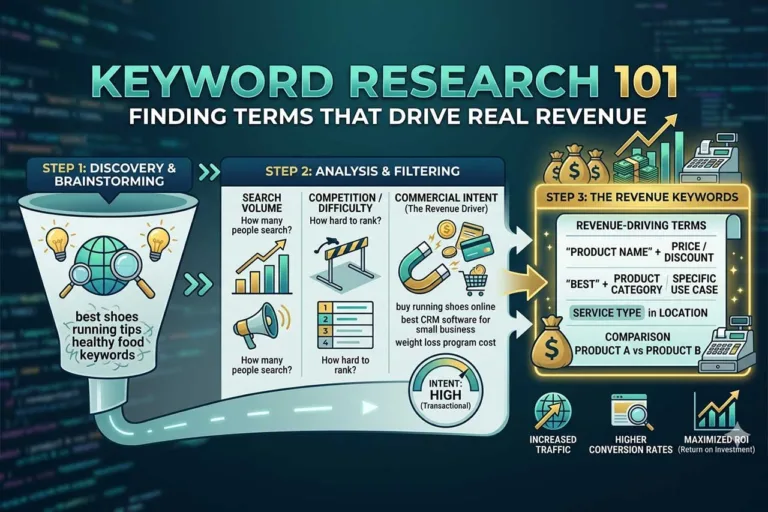
Revenue-focused keyword research is the strategic process of identifying search queries used by active buyers rather than casual browsers. This strategy shifts the focus away from generic terms with millions of monthly searches toward specific, intent-driven phrases that drive sales or lead capture.
For example, a software company will generate more revenue ranking for “best CRM software for small business” than the broad term “business software.” By aligning content with the exact problems a product solves, companies attract qualified traffic. This approach ensures that every piece of content you produce serves a clear business objective, turning your website into an active revenue channel rather than a passive digital brochure.
How does search intent impact revenue generation?
Search intent dictates the likelihood that a searcher will convert into a paying customer. When a user’s intent is transactional, they have their payment method ready and know exactly what they want to buy. Informational intent, conversely, means the user is merely looking for answers and is not yet ready to purchase.
To drive real revenue, businesses must prioritize commercial and transactional search queries. Content targeting these stages of the buyer’s journey speaks directly to product features, pricing, and comparisons. If you rank for a term with the wrong intent, you will receive traffic, but that traffic will immediately leave your site when they realize you are selling a product rather than providing free information.
| Intent Type | User Goal | Keyword Example | Conversion Potential |
|---|---|---|---|
| Informational | Learning about a topic | "What is SEO?" | Low |
| Navigational | Finding a specific website | "Ahrefs login" | Low (unless it is your brand) |
| Commercial | Comparing products or services | "Ahrefs vs Semrush" | High |
| Transactional | Completing a direct purchase | "Buy SEO tool subscription" | ⇧ Very High |
Which keyword research tools are best for finding profitable terms?
The best tools for finding profitable keywords depend entirely on your budget and specific data requirements. Ahrefs and Semrush offer the most comprehensive competitor analysis and the most accurate search volume data for enterprise users. Google Keyword Planner provides excellent baseline data directly from the search engine itself, making it ideal for budget-conscious advertisers and those running Google Ads.
Choose Ahrefs if backlink analysis and organic competitor research matter most to your strategy. Select Semrush if you need deep paid advertising data alongside organic insights. Use Google Keyword Planner for a free, direct-from-source starting point when first launching your keyword strategy. Additionally, tools like AnswerThePublic can help uncover specific questions users ask, which is highly useful for capturing long-tail informational queries that support your main commercial pages.
What are long-tail keywords and why do they convert better?
Long-tail keywords are highly specific search phrases containing three or more words that typically indicate a searcher is further along in the buying cycle. Because these phrases are so specific, they face less competition in search engine rankings and attract users with clear purchase intent.
For instance, “buy waterproof trail running shoes size 10” is a long-tail keyword that will convert at a significantly higher rate than the broad term “shoes.” While the total monthly search volume for the long-tail phrase is much lower, the traffic is highly qualified. Searchers using these specific terms have already done their preliminary research. They know exactly what features they need, and if your landing page offers that exact product, the friction to purchase is nearly zero.
Turn keyword data into measurable business growth
Profitable keyword research requires ignoring vanity metrics and zeroing in on search intent. By targeting the exact phrases your ideal customers use when they are ready to buy, you position your brand as the logical solution to their problems.
Begin by auditing your current keyword rankings to identify any high-intent terms hovering on the second page of search results. Update that existing content to better answer the user’s specific query, improve the page’s call to action, and watch your organic revenue grow. Consistent, intent-focused research is the most reliable way to build a sustainable pipeline of incoming customers.
Consistent evaluation and optimization of your keyword targets will ensure your digital marketing efforts remain profitable over time. If you need expert guidance to scale your traffic and revenue, contact us today for a free strategy quote and see how our customized digital marketing solutions can elevate your brand.
Frequently Asked Questions (FAQ)
How long does it take to see revenue from keyword research?
SEO is a long-term strategy, and it typically takes 3 to 6 months to see significant improvements in organic traffic and revenue from newly targeted keywords. The timeline depends heavily on your website’s existing authority and the competitiveness of the chosen keywords.
Should I target keywords with zero search volume?
Yes, targeting zero-volume keywords is often profitable if the search intent is highly relevant to your product or service. Third-party keyword tools frequently underestimate the volume of very specific, niche target audiences that convert extremely well for specialized businesses.
How many keywords should a single blog post have?
A single blog post should target one primary keyword and three to five closely related secondary keywords. This structure prevents keyword stuffing while thoroughly answering the user’s core question and capturing variations of the main search term.
What is the difference between keyword difficulty and search volume?
Search volume measures how many times a keyword is queried in a search engine per month. Keyword difficulty is an estimated metric showing how hard it will be to rank on the first page for that keyword based on the strength of the current top-ranking pages.